Choosing What Goes Back In: How Copper, PEX and CPVC Actually Compare
Each pipe material ages differently, so the right choice depends on the house and how long you plan to stay.
Schedule an appointment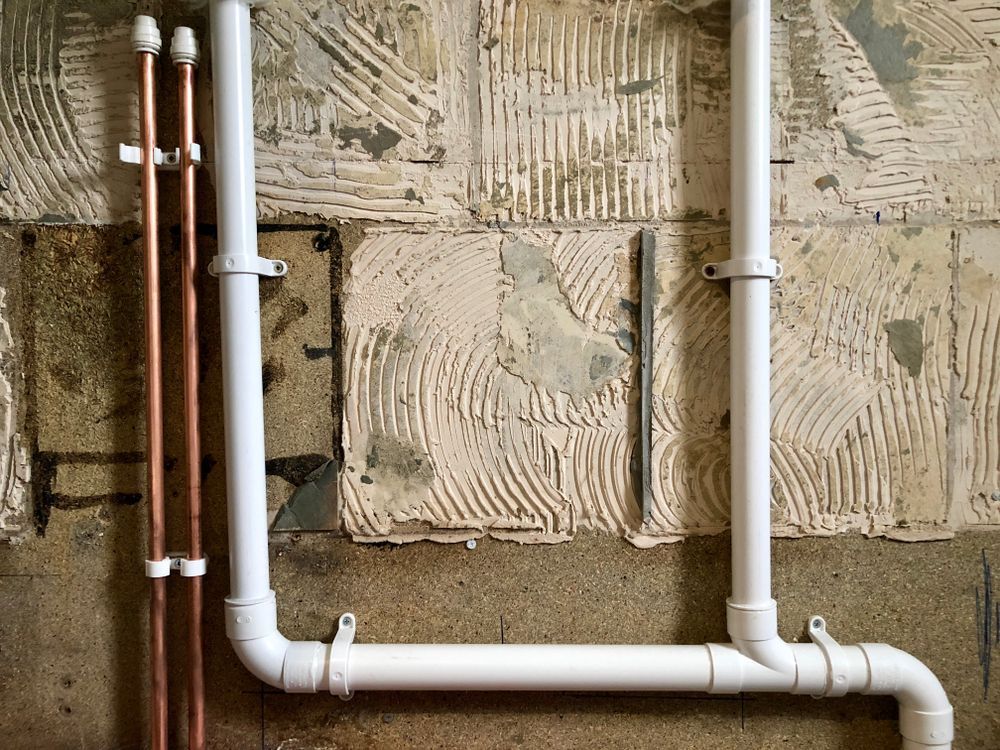
Once a homeowner has accepted that the plumbing needs replacing, the next question arrives immediately and it is the one people get the least useful information about. What should go back in.
The honest answer is that all three common options work, they fail in different ways, and the right one depends on the house rather than on which material a given plumber prefers. Here is how each actually behaves once it is in the walls.
In this guide
Copper: the long standing benchmark
Copper has been the reference point for residential supply plumbing for generations, and there are good reasons it held that position.
It is rigid, which means it holds its shape and stays where it was installed. It tolerates heat without any concern, so it is equally at home on hot and cold lines. It does not degrade under UV exposure, which matters anywhere a pipe is visible. And a properly soldered copper system installed in good water has a very long service life.
The limitations are real though. Copper is the most expensive of the three in material terms, and it is the most labour intensive to install because every joint is soldered individually. That combination makes a full copper repipe the costliest option by a clear margin.
Water chemistry is the other consideration. Water that is acidic or carries certain mineral profiles attacks copper from the inside, producing the pinhole leaks that frustrate homeowners because they appear in a pipe that looks perfectly sound from outside. Where a house has already had pinhole failures in copper, installing more copper without addressing the water is repeating the experiment.
Copper also has no give. In a freeze it does not stretch, so where it does freeze it splits rather than flexing.
PEX: flexible, fast, and fewer places to fail
PEX has taken over a large share of residential repiping, and the reasons are practical rather than fashionable.
It is flexible, which changes the whole installation. A single run of PEX can curve around obstacles and travel from a manifold to a fixture without a joint in between, where copper would need multiple elbows. That matters because joints are where plumbing systems fail. Fewer joints inside a wall means fewer potential failure points you cannot see.
That flexibility also helps in a freeze. PEX can expand somewhat under the pressure freezing water creates, which gives it more tolerance than a rigid material before it ruptures. It is not freeze proof and nobody should treat it as such, but it has margin where copper has none.
Installation is faster and less destructive. Because PEX can be routed through existing cavities with less opening up of walls, a PEX repipe frequently involves meaningfully less drywall damage than the equivalent copper job, which affects both the cost and the disruption of living through it.
The watch points are UV sensitivity, since PEX degrades in sunlight and is not for exposed exterior runs, and fittings. Several fitting systems exist and the quality of the connection method matters, so this is worth asking about rather than assuming all PEX installations are equivalent.
CPVC: the budget option and its trade off
CPVC is rigid plastic pipe rated for hot and cold water, joined with solvent cement rather than soldered or crimped.
Its appeal is cost. Material is inexpensive and installation is quicker than copper, so a CPVC repipe generally comes in as the lowest priced of the three. For a homeowner facing an unexpected replacement on a tight budget, that is not a trivial advantage.
The trade off is how it ages. CPVC becomes progressively more brittle over its life, and brittle rigid pipe has very little tolerance for impact, movement or freeze expansion. An older CPVC system can crack from a knock that newer pipe would shrug off. Some chemicals, including certain spray foams and sealants that might be used nearby during other work, also attack it.
Solvent welded joints are permanent and reliable when done properly, but they require clean work and correct cure time. A rushed CPVC installation produces joints that fail later.
How to actually choose
Rather than ranking the three, it is more useful to match them to situations.
If budget is the binding constraint and the plumbing is in protected interior space, CPVC does the job and gets the house back to working. Accept that its later years are its weaker ones.
If the priority is minimising disruption and reducing hidden joints, and particularly if some runs pass through spaces that get cold, PEX is usually the sensible answer. It is the default for most whole house repipes now for exactly these reasons.
If you intend to be in the house for a very long time, you want maximum durability, water chemistry is known to be reasonable and the budget allows it, copper remains an excellent system and will likely outlast you in the house.
Two questions are worth asking any plumber quoting the work regardless of material. How many joints will end up concealed inside walls, because that number is a reasonable proxy for future risk. And what will the drywall repair situation look like, because that cost is real and it is frequently left out of the comparison between quotes.
About Superior Plumbing
Superior Plumbing has been working on homes since 1988, which puts more than three and a half decades behind the name. The company is owned and operated by Jay Cunningham, a licensed master plumber, and it built its reputation on a simple promise that still runs through everything we do: call the honest plumber. We answer the phone around the clock, because plumbing problems do not keep office hours.
We repipe with the material that suits the house rather than defaulting to one system, we handle water line and gas line work alongside it, and we will walk you through the trade offs honestly before you commit to anything. Call us at 770-422-7586, which you may also see written as 770-422-PLUM.
Pipe replacement in Sandy Springs, GA
Sandy Springs has a large stock of homes from the decades when galvanized steel and then polybutylene were standard, which is why repiping conversations come up here regularly rather than occasionally. Many of those houses are also substantial, with long runs and multiple bathrooms, and that scale makes the joint count and the drywall question more significant than they would be in a smaller home.
Finished basements and renovated interiors are common across Sandy Springs too, and where a homeowner has invested in finished space, the reduced demolition of a flexible system often carries more weight in the decision than the material cost difference does.
Details on the water supply work we carry out are on our water line repair page.
Talk through the options before you commit
If you are facing a repipe, the material decision is worth a conversation rather than a line on a quote. We will look at the house, the existing routing and what you are trying to achieve, and give you a straight comparison.
Get in touch to arrange a visit, or browse our full plumbing services.
Frequently Asked Questions
Is PEX or copper better for repiping a house?
Neither is universally better. Copper is more durable and handles heat and UV without concern, but it costs more, requires a soldered joint at every connection, and splits rather than flexing in a freeze. PEX runs with far fewer concealed joints, tolerates freeze expansion better and needs less demolition to install. The right choice depends on budget, routing and how long you plan to stay.
Why do copper pipes develop pinhole leaks?
Water chemistry. Acidic water or certain mineral profiles attack copper from the inside, thinning the wall until a pinhole opens in a pipe that looks sound from outside. Where a house has already suffered pinhole failures, installing fresh copper without addressing the underlying water quality tends to repeat the problem rather than solve it.
Does PEX handle freezing better than copper?
It has more margin, though it is not freeze proof and should not be treated as such. PEX can expand somewhat under the pressure that freezing water creates, which gives it tolerance before rupture. Copper is rigid and has no give, so where copper freezes it splits. Insulating exposed runs matters regardless of which material is installed.
Is CPVC a bad choice for pipe replacement?
Not bad, but it comes with a specific trade off. It is the least expensive option and performs well early in its life. It becomes progressively more brittle with age, which leaves older CPVC vulnerable to cracking from impact, movement or freeze expansion. It also reacts badly to certain chemicals, including some spray foams and sealants.
Why do joints matter so much in a repipe?
Because joints are where plumbing systems fail, and joints concealed inside walls are the ones you cannot inspect or notice early. A flexible material that runs from manifold to fixture without intermediate connections leaves far fewer hidden failure points than a rigid system needing an elbow at every direction change. Ask any quoting plumber how many concealed joints their approach produces.
Will a repipe damage my walls?
Some opening up is unavoidable, though the extent varies by material and routing. Flexible pipe can often be threaded through existing cavities with less demolition than rigid pipe requiring joints at every turn. Drywall repair is a real cost that is frequently left out when comparing quotes, so it is worth asking each contractor what they expect and who handles it.
Comparing quotes for a repipe?
Ask each plumber how many joints will end up inside your walls and who repairs the drywall once the pipe is in. Call 770-422-7586 or contact us online.
Schedule an appointment