Work From The First Failure Clue
The first clue might be a toilet overflow, a warm spot near a water heater, a ceiling drip after a shower, or a disposal backup. That order matters because water often appears away from the failed part.

Don't Wait Till Its Too Late...Call The Honest Plumber!
Urgent Brookhaven Plumbing Help
A bathroom leak, hidden interior drip, plumbing stain on the ceiling, pipe leak behind a wall, water heater leak, toilet overflow, garbage disposal backup, or shutoff valve failure can damage a Brookhaven home quickly. Superior Plumbing helps homeowners slow the damage, identify which fixture or pipe system is involved, and choose the repair based on evidence instead of the first puddle.
Emergency intake is available for active bathroom leaks, hidden interior leaks, ceiling stains from plumbing, wall leaks, water heater leaks, toilet overflows, disposal and sink backups, and shutoff valves that will not control the water.



CONTROL THE DAMAGE FIRST
Brookhaven plumbing emergencies often show up in finished spaces before the failed part is easy to see. A ceiling stain below an upstairs bath, wet drywall near a renovated kitchen, a toilet that overflows after one flush, or a disposal side that sends dirty water back into the sink can all point to different causes.
The first move is to slow the water or backup, protect the rooms around it, and figure out whether the problem is supply water, drain water, a fixture connection, a valve failure, or equipment leaking nearby. That keeps the repair focused and reduces the chance of opening the wrong cabinet, wall, ceiling, or floor area.
FAST ISSUE CHECK
Choose the closest description that matches what you're experiencing.
Pick the closest pattern. Stop using the affected fixture, keep people away from wet floors or electrical areas, and call 770-422-7586 if water, overflow, or leaking equipment is still active.
WHAT HAPPENS ON THE CALL
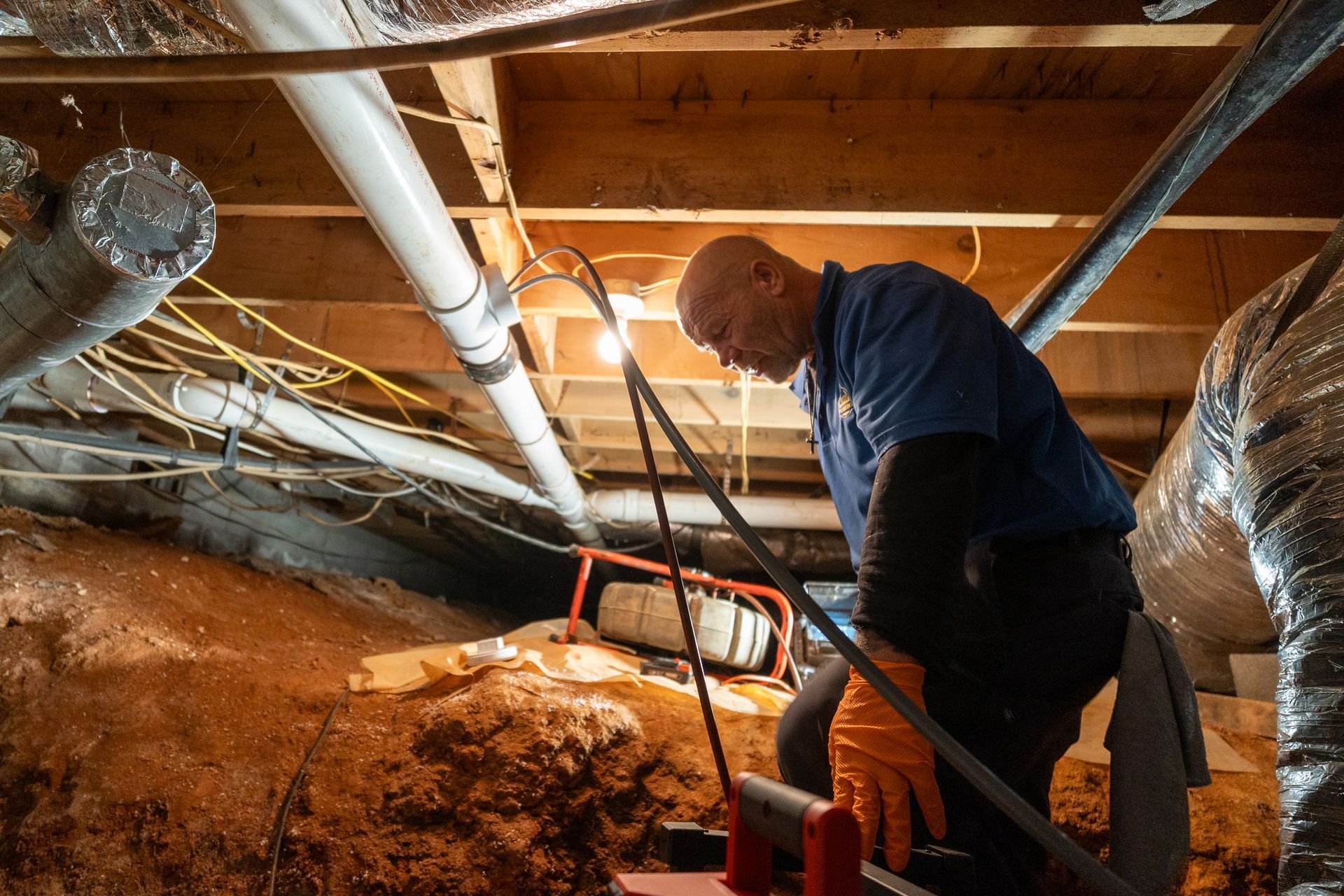
A Brookhaven emergency call should not be treated as a quick guess from a wet spot. The technician needs to stabilize the situation, read the fixture pattern, and decide whether the repair belongs at the visible fixture, a hidden connection, the water heater, the disposal, the toilet, or the shutoff valve.
The first clue might be a toilet overflow, a warm spot near a water heater, a ceiling drip after a shower, or a disposal backup. That order matters because water often appears away from the failed part.
Cabinet bases, hardwood edges, drywall, ceilings, vanities, and nearby electrical areas need protection while the plumbing source is being checked and isolated.
Good emergency diagnosis narrows the path before access is made, so the repair can target the pipe, fixture, valve, heater connection, or drain component that testing supports.
BROOKHAVEN EMERGENCY PLUMBING
Water around a vanity, tub, shower, toilet base, or the room below can come from a fixture connection, drain part, supply stop, overflow, or seal that needs to be isolated before more water is used.
Soft drywall, damp flooring, cabinet moisture, or a stain with no obvious drip calls for source tracing so the repair is made where the water starts, not just where it shows up.
A growing ceiling mark below a bathroom, kitchen, laundry area, or water heater space may be the end point of water traveling through framing before it finally drips.
Bubbling paint, swelling trim, a musty pocket, or a wall that feels damp near plumbing should be checked before the cavity becomes more saturated.
Pans filling, fittings dripping, relief valve discharge, or water spreading around the heater need a controlled check of the equipment and nearby connections.
An overflowing toilet can move contaminated water across flooring fast, especially if the shutoff is stuck or the bowl refills after the first flush.
Dirty water rising into one sink bowl, the disposal side, or the cabinet below can involve the disposal, trap, dishwasher connection, or branch drain serving that sink.
A valve that spins, leaks, sticks, or fails to stop water changes the emergency because the home needs a dependable control point before repairs continue.
DO NOT WAIT ON ACTIVE WATER
TRACE BEFORE REPAIR
A ceiling drip may start at a toilet, tub overflow, shower valve, or water heater area. A sink backup can involve the disposal, trap, dishwasher tie-in, or a short branch serving the kitchen. A wall stain may be fed by a pipe or fixture connection hidden several feet away. Superior Plumbing compares fixture use, moisture location, shutoff behavior, overflow timing, and backup clues before recommending the repair.
Knowing whether the symptom appeared after a flush, shower, sink use, disposal run, laundry cycle, or water heater recovery helps narrow the source.
Fixture stops, heater valves, and shutoff valves are checked carefully because a bad control point can make a manageable leak harder to contain.
The repair should be aimed at the suspected pipe, valve, heater connection, toilet, disposal, or fixture path instead of cutting based only on the wettest surface.
BROOKHAVEN RESPONSE STEPS
The repair process should move from safety to source control to confirmation. That matters when the issue involves water above a ceiling, a leak behind a wall, a water heater, a toilet overflow, a backed-up sink, or a valve that no longer does its job.
Protect from wet electrical areas, slippery floors, soaked ceilings, and contaminated water. Keep people and belongings out of the active wet zone.
Determine whether the emergency is coming from a bathroom fixture, hidden pipe, ceiling path, water heater, toilet, sink/disposal drain, or shutoff valve.
Use a safe working valve or fixture stop when it responds properly, stop fixture use, and keep overflow or leak water from spreading into finished areas.
Correct the failed part the diagnosis points to, whether that is a fixture connection, valve, toilet component, water heater connection, interior pipe, trap, or disposal-related drain part.
Water and drain use are restored in a controlled way so the homeowner knows what is working, what was repaired, and what should be watched after the visit.
WHEN IT IS MORE THAN A SIMPLE FIXTURE MESS
Some problems look like a simple spill until the same symptom returns, appears in another room, or fails to stop when the obvious valve is turned. That is when towels, plunging, and repeated testing can make the damage worse.
REPAIR DECISION
The first priority is stopping active damage. Once the Brookhaven home is stable, Superior Plumbing looks at whether the failure is limited to one part or whether the pattern shows a larger correction is needed inside the affected plumbing area.
Call 770-422-7586 if the Brookhaven emergency is spreading, repeating, or difficult to isolate. The first room affected, the fixture used last, and the shutoff response help determine the safest next step.
BROOKHAVEN HOME CONDITIONS
Brookhaven includes older homes, renovated kitchens and baths, multi-story townhomes, condos, and busy household layouts where plumbing may pass above finished rooms or behind updated walls. That can make a bathroom leak, ceiling stain, wall leak, or water heater leak look simple from the outside while the failed part sits somewhere else.
Disposal backups, toilet overflows, and shutoff valve problems also need a careful read because the first visible problem may not show which component failed. Superior Plumbing checks how the symptom behaved, what was used last, and whether the water can be safely controlled before the repair plan is set.
WHY SUPERIOR PLUMBING
When water is moving through a ceiling, backing up from a sink, spreading from a water heater, or overflowing from a toilet, the wrong first move can cost the homeowner more than the leak itself. Master plumber leadership matters because urgent decisions have to be made in the right order: protect the home, identify the plumbing path, control what can be safely controlled, and repair the part that the evidence supports.
Superior Plumbing is owned and operated by licensed master plumber Jay Cunningham. That leadership shows up in the way emergency calls are handled: the visible water is taken seriously, but the repair is not chosen until the technician understands the fixture clues, valve behavior, hidden leak pattern, and risk to the surrounding rooms.
RELATED REPAIR OPTIONS
Once the active leak, overflow, or backup is under control, the next service depends on what actually failed. A ceiling stain, toilet overflow, disposal backup, water heater leak, or shutoff problem can lead to different repair work.
Emergency help for bathroom leaks, hidden interior leaks, ceiling leaks from plumbing, pipe leaks behind walls, water heater leaks, toilet overflows, garbage disposal and sink backups, and shutoff valve failures.
Current ServiceHelp for leaking toilets, tubs, showers, vanities, supply stops, drain parts, and bathroom fixtures sending water into floors or rooms below.
Source checks for ceiling stains, wet drywall, damp cabinets, bubbling paint, and pipe leaks behind finished walls.
Repair for overflowing toilets, failed fill or flush parts, leaking bases, stuck fixture stops, and water reaching nearby flooring.
Help for heater pan water, dripping fittings, relief valve discharge, nearby floor moisture, and leak checks around hot-water equipment.
Support for backed-up garbage disposals, kitchen sink drain assemblies, leaking fixture valves, stuck shutoffs, and interior pipe sections tied to the emergency.
FAQs
Stop using the bathroom fixture, use a safe fixture shutoff only if it clearly controls the leak, move items away from the wet area, and keep people off slippery floors. The repair depends on whether the leak is from a supply stop, drain, toilet, tub, shower, or fixture connection.
Watch for damp drywall, soft flooring, cabinet moisture, bubbling paint, musty pockets, or a stain that grows after a fixture is used. Hidden leaks need source tracing before cutting into a wall or ceiling.
Yes. Water can travel through framing from a toilet, tub, shower, sink, laundry area, or water heater space before it appears on the ceiling below. The timing of the leak often helps identify the source.
Common clues include swelling trim, a damp wall surface, peeling paint, a localized musty smell, or water appearing at the floor line. Avoid drilling or opening the wall until the leak path is checked.
It can be, especially when water is spreading beyond the pan, the leak is near electrical components, or a valve or fitting is actively dripping. Stop using nearby water when needed and call for a controlled check of the heater area.
Do not keep flushing. Try the fixture shutoff only if it turns normally and does not leak. Keep people away from contaminated water, protect nearby flooring, and call for repair if the bowl keeps rising or the shutoff fails.
The issue may involve the disposal, trap, dishwasher connection, or the drain path serving the sink. Stop running water or the disposal when dirty water is returning to the basin or leaking into the cabinet.
Do not force a valve that feels stuck, brittle, or likely to break. A failed shutoff changes the repair because the technician needs a safe way to control the water before fixing the leak or fixture.