Should You Repair or Replace an Older Toilet?
Most toilet trouble lives in inexpensive tank parts, but a crack, constant clogs, or heavy water use changes the math.
Schedule an appointment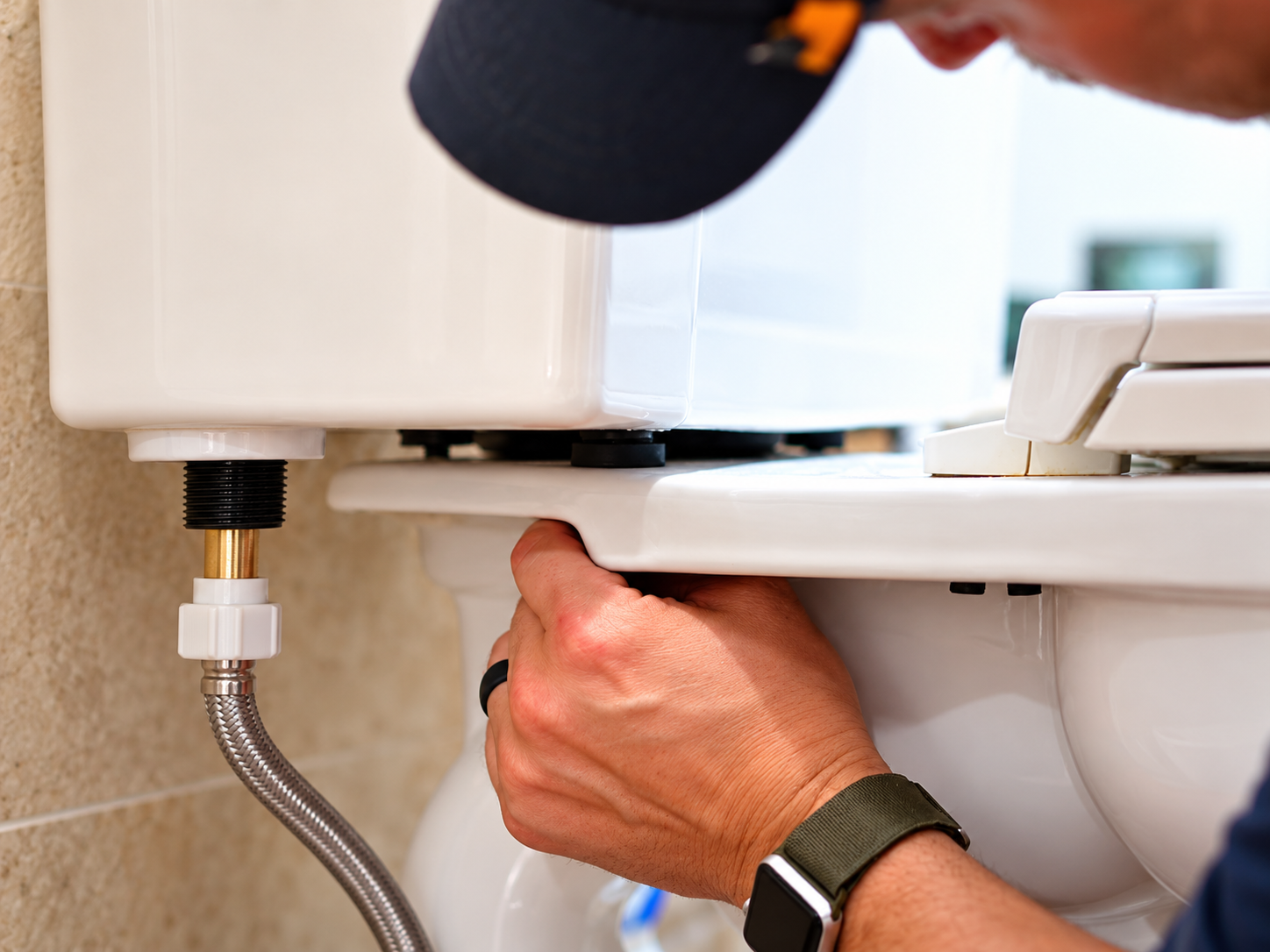
Repair an older toilet when the problem is in the tank parts, like a running flapper, a slow fill valve, or a loose handle, and the porcelain itself is sound. Replace it when the bowl or tank is cracked, when it clogs often because of how it was designed, or when it uses far more water per flush than a newer model.
Most toilet trouble comes from the small moving parts inside the tank, which wear out long before the china does. So for a lot of Marietta homeowners, a toilet that runs all night still has plenty of life left in it.
The harder calls are the in-between cases: a toilet that works but wastes water, or one that has needed three fixes in two years. Those come down to what the old fixture is costing you in water, repairs, and your own patience.
In this guide
When a Repair Is the Smarter Call
Repair makes sense when the porcelain is sound and the problem lives in the parts. Flappers, fill valves, handles, and seals wear out on their own schedule, and replacing them is quick and costs far less than a new toilet.
It runs or refills on its own
A toilet that keeps running, or refills for a few seconds every so often when nobody has touched it, has water slipping from the tank into the bowl. That random refill is sometimes called a phantom flush. The usual culprit is a worn flapper or a fill valve that no longer shuts off cleanly, and both are standard parts.
The flush is weak or takes two tries
Weak flushes often come from a flapper chain with too much slack, a water level set too low in the tank, or mineral deposits narrowing the small rim holes under the edge of the bowl. Those are adjustments and cleanups, and none of them is a reason to buy a new toilet.
It rocks or leaves water at the base
A toilet that rocks has usually worked loose at the bolts holding it to the floor, and the rocking can break the wax ring, the seal between the toilet and the pipe in the floor. Water around the base is a sign that seal has failed. Pulling the toilet, putting in a new wax ring, and resetting it on solid footing is a repair, as long as the floor underneath is still firm.
If one of these is the only problem and the toilet otherwise flushes well, a repair is almost always the better value. You can see what that work involves on the toilet repair and installation page.
When Should You Replace the Toilet Instead?
Replace the toilet when the china itself is damaged, when its design keeps causing trouble, or when it uses enough water that a newer model would cut your bills noticeably.
Cracks in the tank or bowl
Porcelain can't be reliably repaired. A hairline crack in the tank may seep for months and then give way all at once, and a crack in the bowl can leak at the base where it's hard to see. Once you find a crack that holds water, it's time for a new toilet.
Clogs that keep coming back
Some toilets from the early years of low-flow designs, back in the 1990s, struggled to clear the bowl in one flush. If you're reaching for the plunger every week, the toilet itself may be the weak link. For a one-time stoppage, start with help for a clogged toilet instead.
Heavy water use
Toilets made before the mid-1990s commonly use 3.5 gallons or more per flush. Current federal rules cap new toilets at 1.6 gallons, and many newer models use less than that. In a busy household, the difference shows up on every water bill. Look for a gallons-per-flush stamp inside the tank or behind the seat hinge.
Fixes that keep stacking up
When an older toilet needs a new part every few months, the porcelain may be fine but the fixture is wearing you out. Parts for some older models can also be hard to track down.
A quick side-by-side
- Repair: running, phantom refills, weak flushes, a loose handle, or a failed seal on a solid floor.
- Replace: any crack, constant clogs from a poor design, high water use, or a new problem every few months.
Why Superior Plumbing Gives a Straight Answer on Toilets
Superior Plumbing is owned and operated by Jay Cunningham, a licensed master plumber, so even a simple toilet repair is held to a standard set by someone with that license. You can meet the people behind the company on its website.
The company does both toilet repair and toilet installation, so there's no reason to steer you toward a new fixture when a part will do the job.
Its focus is fixing the problem right the first time. In practice, a leaking base should get a new seal and a solid reset, not a bead of caulk that hides the water while the floor keeps soaking it up.
How Local Homes Put Older Toilets to the Test
Marietta has a wide spread of housing ages, from older homes near the historic center to newer subdivisions farther out, and that means a wide spread of toilets, too. In an older house, it isn't unusual to find a decades-old toilet that still flushes but uses far more water than a modern one.
Many homes in the area sit over crawl spaces. A slow leak at a toilet's wax ring can soak the subfloor from above for a long time before anyone sees it, and humid summers make a damp crawl space easy to shrug off. A soft or spongy spot on the bathroom floor near the toilet deserves a look before you choose between repair and replacement, because the floor may need fixing first.
Toilets in unheated spaces, like a pool house or a detached garage, can also crack during an occasional hard freeze if the water inside isn't drained beforehand.
Before You Buy a New Toilet
Lift the tank lid, note the date and flush volume stamped inside, and jot down what the toilet is actually doing. Then book a toilet assessment and let a plumber tell you whether a part swap will handle it. Marietta homeowners who want a plumber with no stake in selling them a new fixture can start with Superior Plumbing, which handles repairs and installations alike. You can also reach the office at 770-422-7586.
Old Toilet Questions
How long does a toilet last?
The porcelain bowl and tank can last for decades if nothing cracks them. The parts inside are another story: flappers, fill valves, and seals usually need replacing every several years, depending on use and water conditions. That's why age alone isn't a reason to replace a toilet. An old toilet with a sound bowl and fresh parts can still work fine, though it may use more water than a newer one.
How can I tell how many gallons my toilet uses per flush?
Lift the lid and look for a stamp on the back wall of the tank, or check the bowl behind the seat hinge. Many toilets list the gallons per flush there, along with a manufacture date. If you can't find a marking, a toilet built before the mid-1990s likely uses more than current models. You can also measure by marking the water line, shutting off the supply, flushing, and refilling with a measuring container.
Is a running toilet worth fixing right away?
Yes, in most cases. A toilet that runs constantly sends clean water out of the house all day, and a steady leak can add noticeably to a monthly water bill. The fix is usually simple, often a new flapper or fill valve. If the running stops for a while after you jiggle the handle, the flapper or its chain is the most likely cause.
Can I replace a toilet myself?
Some handy homeowners do. The job means shutting off the water, draining and lifting out the old toilet, checking the flange, setting a new wax ring, and leveling and securing the new one. Trouble usually comes from a damaged flange, a subfloor softened by an old leak, or a seal that isn't seated right, which can leak slowly under the floor for months before anyone notices.
What is a comfort height toilet?
A comfort height, or chair height, toilet has a seat set a couple of inches higher than a standard model, closer to the height of a dining chair. Many adults find it easier to sit down and stand up, especially with knee or hip trouble. It's a common reason to replace an older toilet that still works. Shorter adults and children sometimes prefer standard height, so try one first.
Should I replace every toilet in the house at the same time?
Not necessarily. If one toilet has a cracked tank and the others work fine, replacing just that one is reasonable. Some homeowners replace them together for a matching look or to cut water use across the house, and doing it all at once can be convenient. The deciding factor should be the condition and flush performance of each toilet, not a feeling that they all have to go together.
Not Sure Whether to Fix It?
Tell us how old the toilet is and what it's doing, and we'll give you an honest read on whether a part will do the job. Call 770-422-7586 or contact us online.
Schedule an appointment