
Access Chosen Deliberately
The safest route may be through a fixture opening, removable trap, or cleanout. Pipe material, clog location, and the risk of damaging finished surfaces all matter.


Don't Wait Till Its Too Late...Call The Honest Plumber!
Decatur, GA Drain Cleaning
A drain that repeatedly slows, smells bad after cleaning, or backs up into another fixture needs more than another quick attempt at the surface. Superior Plumbing clears drain restrictions in Decatur homes and businesses, traces recurring clogs with camera inspection when appropriate, and accounts for roots, mineral scale, older cast-iron or clay pipe, and everyday bathroom buildup before choosing how to restore flow.
Superior Plumbing helps Decatur property owners separate a simple fixture clog from a deeper restriction without relying on harsh chemical drain cleaners or unnecessary work.




QUICK SYMPTOM CHECK
Choose the closest description that matches what you're experiencing. This quick check can help you limit further buildup or backup while you arrange a proper drain evaluation.
WHAT MAY BE SLOWING THE LINE
Decatur includes older houses, renovated properties, mature landscaping, and newer plumbing tied into existing drain routes. That mix can produce anything from a hair-packed bathroom trap to roots or rough pipe walls restricting the main drain.
Superior Plumbing starts by controlling use around the affected fixture and tracing the flow pattern. The technician considers whether the restriction is at the fixture, trap, branch drain, or farther along the shared waste path, then chooses an access point and clearing method that fits the material and condition of the pipe.
A DIAGNOSTIC-FIRST VISIT
The goal is not simply to make standing water disappear. A useful visit should identify the likely restriction, protect the surrounding area, and explain whether the line now carries normal flow or needs closer inspection.
The safest route may be through a fixture opening, removable trap, or cleanout. Pipe material, clog location, and the risk of damaging finished surfaces all matter.
A drain that re-clogs after ordinary clearing may need camera inspection to reveal root entry, heavy scale, offsets, or damaged sections that continue catching waste.
The technician should limit splashing and wastewater exposure, keep tools controlled around flooring and cabinetry, and explain which fixtures can be used again after testing.
EIGHT DECATUR DRAIN PATTERNS
Roots entering at vulnerable joints can form a screen that catches paper and waste. Several fixtures slowing together or a clog that returns after cutting through it can point to root restriction farther down the line.
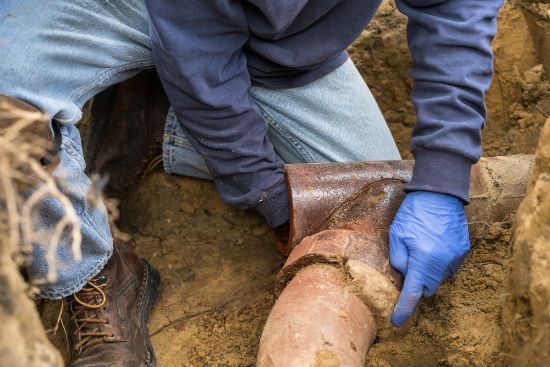
Repeated clearing without knowing what remains in the pipe wastes time. A camera inspection may reveal roots, scale, offsets, or deteriorated areas that keep creating the same snag point.
Cast iron can become rough and scaled inside, while clay sections may shift or separate at joints. Both conditions make it easier for ordinary waste to catch and rebuild a blockage.
A fixture opening, removable trap, or cleanout can each provide a route to the obstruction. The best choice is the one that reaches the affected run without forcing equipment through a fragile fixture or sharp turn.
Wiping a stopper or rinsing the bowl may cover the smell briefly. Odor that comes back can be held in a trap, overflow passage, branch drain, or buildup coating the pipe beyond the visible opening.
Hard deposits leave the pipe wall uneven instead of smooth. Hair, soap residue, paper, and other solids catch on that rough surface, gradually reducing the usable opening.
Caustic products can heat up inside a blocked drain, attack some pipe and fixture finishes, and remain trapped where a technician must work. They also do not remove roots or correct a rough, deteriorated pipe wall.
Hair combines with toothpaste, soap, shaving cream, cosmetics, and sticky grooming products below the stopper. The result is a dense plug that returns quickly when only the visible debris is removed.
BEFORE THE CLOG CLOSES COMPLETELY
A sink may drain for a short time after hair is pulled from the stopper even though toothpaste, scale, or other buildup remains beyond the trap. Recurring symptoms justify checking the affected run and, when appropriate, looking inside the pipe before another clearing attempt.
Call 770-422-7586TRACE THE RESTRICTION
Standing water at a sink only shows where flow stopped becoming usable. The cause may sit under the stopper, inside the trap, along a shared branch, or much farther down where roots, scale, or deteriorated material keep catching waste. Odors and reactions at nearby fixtures help distinguish those locations.
Which fixture started first, what gurgles when water runs, and whether an odor follows use all help define the affected portion of the drain.
Camera inspection can be useful after recurring clogs or when older pipe, roots, scale, or a suspicious snag point may remain after flow is restored.
Water is run through the affected fixtures while nearby drains are watched for slow response, gurgling, rising water, or odor that suggests the path is not fully open.
FROM BACKUP TO VERIFIED FLOW
Each step narrows the cause, reduces exposure inside the home, and confirms whether normal water use can resume without the same symptom returning.
Protect from wet electrical areas, slippery floors, soaked ceilings, and contaminated water. Stop using affected fixtures until the exposure is controlled.
Fixture reactions, drain sounds, odors, and the timing of the backup help separate a local trap problem from a shared branch or main-drain restriction.
The technician evaluates the fixture opening, trap, and available cleanout before selecting the route that can reach the clog with the least risk to pipe and finishes.
Hair and grooming buildup, mineral scale, root restriction, and rough older pipe do not call for identical handling. The method is adjusted to what the line can safely tolerate.
Fixtures are tested under normal flow, nearby drains are checked for a reaction, and the homeowner is told what can return to service and what still needs to remain unused.
WHEN ONE FIXTURE IS NOT THE WHOLE STORY
A surface clog usually affects one fixture. Roots, scale, or buildup farther along the shared drain path can make water rise somewhere else in the home. That difference matters because every additional gallon can feed the backup.
RIGHT-SIZED DRAIN WORK
The symptom pattern, access, pipe material, and history determine whether the work can stay at one fixture or needs to address a longer section of the drain path.
Not sure how far the restriction extends? Call 770-422-7586 and explain which fixture started first, what else reacts, and whether the problem has been cleared before.
PIPE AGE, ROOTS, AND ACCESS
A Decatur property may combine older cast-iron or clay drainage with remodeled fixtures and newer interior plumbing. Mature landscaping can also put root growth near buried drain paths. Those conditions do not prove the cause of a clog, but they make pipe age, access, and repeat history worth checking before work begins.
A bathroom sink full of grooming residue should not be treated like a main drain restricted by roots or scale. Superior Plumbing follows the fixture clues, works from the safest available access point, and tests the affected path before telling the homeowner the line is ready for normal use.
SERVICE THAT PROTECTS THE HOME
After a backup, homeowners need a clear answer about more than whether the standing water disappeared. Superior Plumbing checks how the affected fixture drains, watches connected fixtures for a reaction, and explains which parts of the home can return to normal use.
If wastewater or moisture reached cabinets, flooring, walls, a mechanical area, nearby valves, or water-heating equipment, those affected areas are addressed in the use guidance. The team does not tell a homeowner to restart everything blindly when part of the system or room still needs attention.
RELATED DRAIN AND FIXTURE SERVICES
Sometimes the drain is the only problem. In other cases, the fixture, disposal, trap, valve, or connected bathroom or kitchen component also needs attention after the obstruction is removed.
Clear recurring sink clogs, bathroom buildup, root restrictions, mineral scale, and slow shared drains with an approach matched to the pipe.
Current ServiceAddress toilets that overflow, gurgle, drain incompletely, or react when another bathroom fixture is used.
Diagnose disposal jams, poor grinding, leaks under the sink, and kitchen drainage that slows while the unit runs.
Check leaking tanks, inconsistent hot water, unusual sounds, ignition trouble, and components that affect normal household use.
Repair sink, tub, shower, toilet, trap, and shutoff problems that remain after the drain path is restored.
Resolve sink drainage, disposal, faucet, trap, and under-cabinet plumbing issues that disrupt everyday kitchen use.
Repair drips, worn cartridges, damaged drains, loose handles, and shutoff valves that do not operate correctly.
DECATUR HOMEOWNER QUESTIONS
Recurring clogs can mean the first clearing opened only part of the restriction, or that roots, mineral scale, a rough older pipe wall, or a shifted joint keeps catching new waste. A camera inspection may be appropriate when the same drain repeatedly slows after ordinary clearing. Call 770-422-7586 for the fastest available scheduling.
Yes. Roots can form a partial screen inside a vulnerable joint. Water may still pass at first, but paper and solids collect around the roots until several fixtures slow, gurgle, or send water toward the lowest drain.
No. A straightforward bathroom sink clog may be reached and removed without a camera. Inspection becomes more useful when the clog returns, older cast-iron or clay pipe is involved, roots are suspected, or the clearing tool repeatedly meets the same obstruction.
The visible stopper is only one place where residue collects. Hair, toothpaste, soap, and grooming products can coat the overflow passage, trap, or branch drain. If the odor quickly returns, the hidden buildup and trap condition should be checked.
They are a poor choice for a recurring or fully blocked drain. Caustic liquid can remain trapped, generate heat, damage some finishes and components, and expose anyone who later opens the trap. It also cannot remove roots or correct rough, deteriorated pipe.
The safest access depends on where the restriction is likely located, the type and condition of the pipe, and what can be removed without damaging the fixture or finished surfaces. The technician should choose the route that reaches the affected run with the least unnecessary risk.