
Identify the Actual Material
Pipe markings, connections, and visible history are reviewed before treating every blue-colored line as polybutylene. At the Kennesaw property, actual access should guide the decision.


Don't Wait Till Its Too Late...Call The Honest Plumber!
Polybutylene (Blue Poly) Pipe Replacement | Kennesaw, GA
A wet patch between the meter and the house does not tell you whether the buried line is polybutylene or exactly where it has failed. Superior Plumbing checks the material, the route, and the water-loss evidence before recommending a replacement that fits the property.
Kennesaw is home to Superior Plumbing. Since 1988, the company has helped Metro Atlanta customers make decisions about leaking water lines and problem piping.




METER-TO-HOME WATER LOSS CHECK
Select the clue that is closest to what you are seeing. A water meter that keeps turning and ground that never quite dries can tell different stories. Choose the observation you know, then plan to verify which system is losing water.
POLYBUTYLENE (BLUE POLY) PIPE REPLACEMENT IN KENNESAW
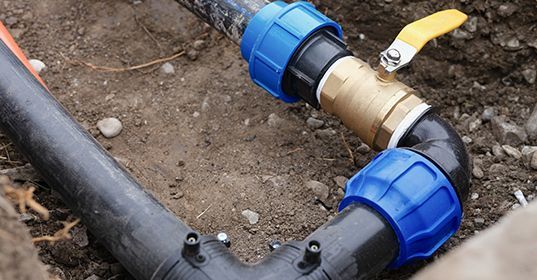
On a Kennesaw property, a suspected Blue Poly service-line leak may show up as muddy soil, meter movement, or a pressure change long before water reaches the house. The route may pass beneath a planting bed or paved approach, so where the ground looks wet is only one clue.
A careful evaluation begins with the water meter, reachable shutoffs, the material markings, and the last point where pipe can be seen. This helps distinguish failed polybutylene from irrigation, a fixture leak, or another source of water in the yard.
WHAT A USEFUL SERVICE VISIT COVERS
The useful question is how far the verified polybutylene extends. A Kennesaw service-line discussion should distinguish a localized fitting from a buried length that has become unreliable.
Pipe markings, connections, and visible history are reviewed before treating every blue-colored line as polybutylene. At the Kennesaw property, actual access should guide the decision.
Supply isolation and site clues distinguish a failed fitting from a longer damaged service or interior water run. That distinction matters when the concern is a leaking underground service and its transition into the home.
The proposed work should name the starting point, endpoint, new pipe material, access needs, and what will be tested afterward. This helps separate a visible symptom from the cause that needs work.
WHAT CAN GO WRONG WITH BLUE POLY WATER PIPING
A damp coupling can dry out between pressure cycles while the joint continues to weaken. Look for water patterns around connectors, not only the exposed pipe. For a Kennesaw property, that distinction can affect where work begins and what needs protection.
A wet strip between a meter and the building can be caused by a buried water service, irrigation line, or drainage. Isolating the source comes first. The sensible choice is to confirm the condition on site before promising a repair scope.
Color can be misleading. Printed material markings, installation history, and the way fittings join the pipe help identify what actually needs attention. It helps to tell the plumber when the symptom appeared and whether it has happened before.
A small supply leak may soak framing before a stain appears. A dry wall surface does not prove the concealed line is intact. An inspection can distinguish this concern from another issue with similar visible signs.
Several isolated patches can indicate a wider material or fitting problem. The locations and ages of past repairs matter when planning the next step. That is why the immediate symptom and the larger system history should be considered together.
A sudden fixture demand or pressure fluctuation can reveal leakage at stressed fittings. Pressure testing should be controlled and interpreted carefully. On a real property, access and nearby connections can change the most practical correction.
Soil may stay damp, settle, or grow unusually lush where water escapes. Those signs need to be separated from runoff and irrigation. The repair discussion should explain what was observed, not just what might be wrong.
An old adapter may sit behind a sink, tub, or laundry connection. The failure can be at that transition rather than along the straight pipe. The goal is to avoid replacing parts that do not explain the complaint.
WARNING SIGNS WORTH CHECKING
A damp area in the yard may be related to irrigation or surface drainage. Do not authorize excavation until the leaking system and likely route have been identified.
Call 770-422-7586LOCATE THE REAL CAUSE
Outdoor water can come from more than the supply route. The meter, accessible isolation points, and material labels are the clues that narrow a proposed Blue Poly replacement.
Meter movement and controlled shutoffs help show whether the suspected pipe is losing water while fixtures are idle. At the Kennesaw property, actual access should guide the decision.
The team considers connections, accessible transitions, and the likely pipe route before proposing openings or excavation. That distinction matters when the concern is a leaking underground service and its transition into the home.
A repair is checked under operating pressure, with careful attention to transitions and any remaining older material. This helps separate a visible symptom from the cause that needs work.
SERVICE PROCESS
A replacement route should not be designed around the first puddle. Confirm the line, locate the affected portion, and decide how the new piping can reach the building with appropriate access.
Identify a safe shutoff and keep water away from receptacles, panels, and occupied rooms. The specific finding should be explained before any broader correction is proposed.
Review visible marks, connection style, pressure behavior, and the suspected section. A clear answer identifies what was tested and what remains uncertain.
Choose practical access from meter to building or within walls, and identify fixtures that could be affected. At the Kennesaw property, actual access should guide the decision.
Install suitable materials and connections for the confirmed section without assuming every pipe must be replaced. That distinction matters when the concern is a leaking underground service and its transition into the home.
Check joints, operating flow, and shutoffs before closing the work area or returning fixtures to normal use. This helps separate a visible symptom from the cause that needs work.
WHEN THE SCOPE MAY GROW
In Kennesaw, the response can change when a leaking underground service and its transition into the home is not confined to one accessible point. These conditions can justify a broader discussion, although none is proof by itself.
COMPARE CORRECTION OPTIONS
One confirmed leaking connector is different from a service run that keeps failing underground. The choice depends on pipe condition, evidence of repeated loss, and what excavation would actually reach.
Ask which evidence supports the meter-to-home water loss recommendation. Call 770-422-7586 and explain the site details that could change access or the repair boundary in Kennesaw.
KENNESAW PLUMBING CONTEXT
Kennesaw homeowners sometimes find that the water pipe entering a finished home is not the same material as the pipe outdoors. A newer kitchen supply does not establish the condition of the buried service line, and a blue-colored tube needs material verification.
The decision is about replacing the right run. If the problem is in the ground, access, meter-side coordination, the route around hardscape, and the connection at the building may matter more than the number of wet spots on the surface.
SERVICE YOU CAN QUESTION AND UNDERSTAND
The pipe entering a Kennesaw home may be completely hidden between its meter and the first interior connection. The explanation should identify which length is leaking and how its material was confirmed.
A wet yard can lead to an expensive wrong turn if irrigation, drainage, and house supply are not separated. Jay Cunningham started Superior Plumbing in Kennesaw in 1988, and the company continues to focus on evidence-based waterline work.
RELATED PLUMBING HELP IN KENNESAW
A buried pipe problem can be confused with an irrigation leak, an interior supply failure, or excess pressure at the house. These plumbing services address different pieces of that investigation.
Investigate a leaking underground service and its transition into the home and discuss the system conditions relevant to a Kennesaw property.
Current ServiceLocate water loss between the supply entry and its upstream connection.
Find wet walls or unexplained meter movement before opening finishes.
Review broader supply replacement when multiple older runs are affected.
Check pressure control that may stress fittings and fixture supplies.
Correct shutoffs and adapters at sinks, toilets, and laundry equipment.
Discuss route, access, materials, and the scope of a waterline renewal.
KENNESAW POLYBUTYLENE (BLUE POLY) PIPE REPLACEMENT QUESTIONS
No. Color is only a clue. A plumber should check the pipe marking and type of fittings before confirming polybutylene or proposing a replacement.
Sometimes a verified, accessible connection can be addressed locally. A history of additional leaks or deteriorated nearby material may make a longer replacement worth discussing.
A changing meter with everything off, persistent damp ground, or unexplained water use can support the suspicion. Isolation tests are needed because irrigation and other water sources can look similar.
That depends on where the line runs and whether an accessible alternative route is available. The plan should identify specific openings rather than assume every wall must be disturbed.
Not necessarily. The service line connects an external supply to the building, while repiping may cover interior distribution to fixtures. Either or both may be involved.
Approved replacement material depends on the route, application, local requirements, and existing connections. A plumber can explain suitable options after identifying the line. To discuss meter-to-home water loss at your property, call 770-422-7586 and describe the symptoms you have noticed in Kennesaw.