Atlanta Water Service Line Evaluation

Water Line Repair & Replacement Atlanta GA

A water meter that keeps registering after known water use is off, rusty or cloudy water at several fixtures, declining flow, or water collecting near the foundation can point to a problem in the property’s water-supply system. Those symptoms do not automatically prove the underground service line has failed. Superior Plumbing compares meter activity, where discoloration appears, whether flow loss affects the whole property, accessible pipe material, the meter-to-building route, and prior repairs before recommending a targeted repair or full replacement.

Evaluation and repair planning for unexplained meter movement, rusty or cloudy water, galvanized restriction, copper line deterioration, sediment-related flow loss, foundation moisture, ownership questions, and full-line replacement decisions.

Meter And Usage Clues Discolored Water Evaluation Galvanized And Copper Line Review Atlanta Repair Scope Review
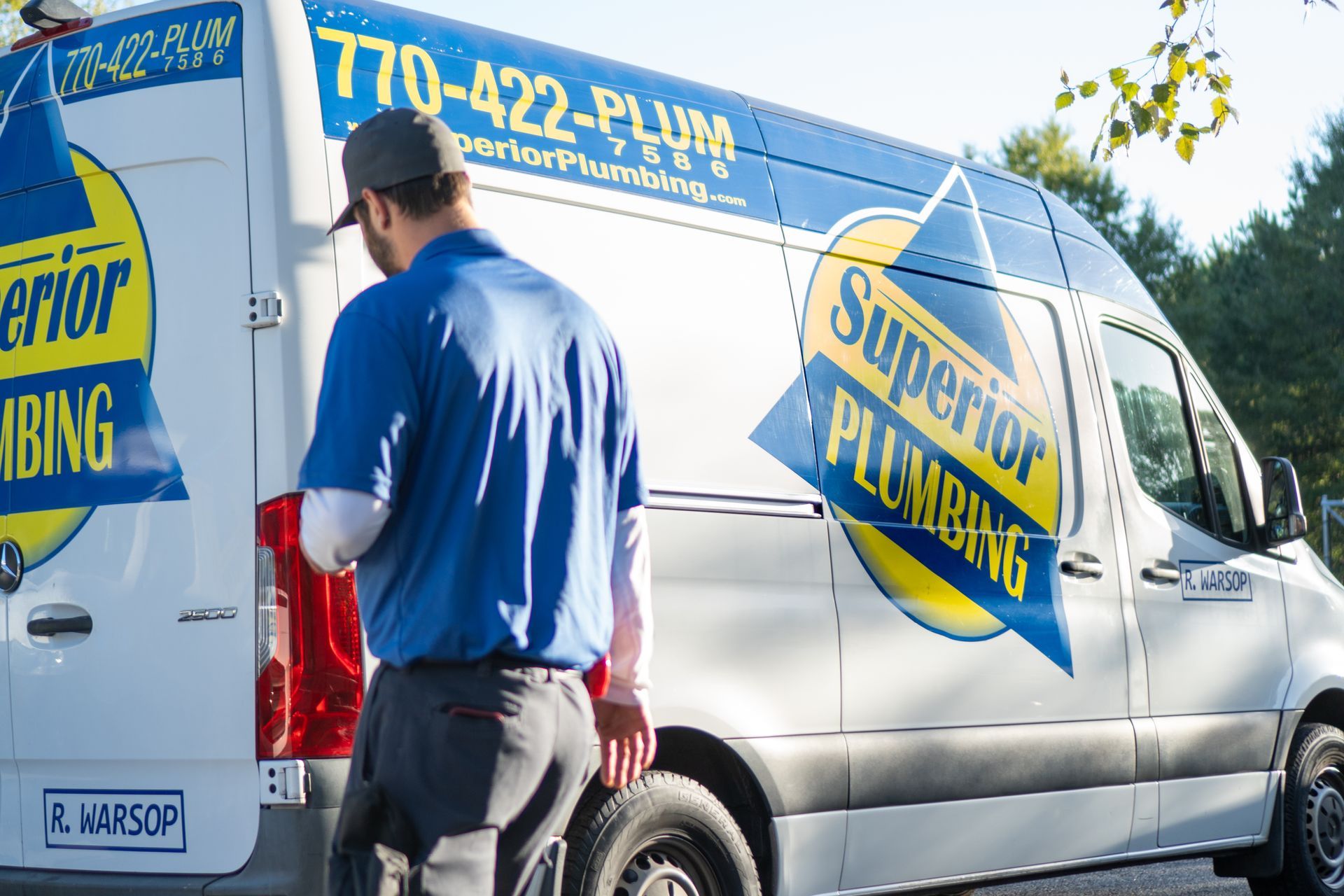
Superior Plumbing service truck for water line repair and replacement in Atlanta GA
Rusty water and weak flow can come from different parts of the system. Note whether the change affects hot water, cold water, one fixture, or the entire property. Stay away from wet electrical areas and unstable ground, reduce unnecessary water use, and have the source confirmed before anyone assumes the exterior line must be replaced. Call Superior Plumbing: 770-422-7586
Superior Plumbing logo for Atlanta water line service The Honest Plumber Serving Atlanta and Metro Atlanta Superior Plumbing BBB badge Diagnosis Before Excavation Confirm the source, line, and responsibility first Superior Plumbing award badge Metro Atlanta Since 1988 Long-term local plumbing experience Superior Plumbing Google reviews badge Repair Scope Explained Understand why repair or replacement fits



Quick Answer

Does Discolored Water Or Low Flow Mean The Service Line Is Failing?

Not by itself. Rusty, cloudy, or sediment-filled water can originate in a utility-side condition, an interior galvanized or copper line, a water heater, a fixture, a valve, or the exterior service line. The pattern across hot water, cold water, and multiple fixtures matters.

A meter that continues registering after known water use is off is a stronger clue that water may be escaping after the meter, but it still does not show where the loss is occurring or who owns the affected component. The evaluation should separate water-quality clues, flow restrictions, and active leakage before the scope is chosen.

Schedule An Atlanta Water Line Evaluation

Tell Us What Changed Across The Property

For active water loss, unstable soil, water near electrical equipment, or a major pressure drop, stay clear of unsafe areas and call 770-422-7586.

Separate The Symptom From The Source

Atlanta Water Line Problems Can Resemble Several Different Plumbing Issues

An Atlanta property may first show a moving meter, rusty cold water, cloudy water after a period of low use, weak flow across several fixtures, or moisture where the service line enters the building. Those observations support an inspection, but they can overlap with interior piping, water-heater conditions, fixtures, irrigation, drainage, groundwater, or a utility-side issue.

A useful evaluation connects the symptom to the system. The technician should compare hot and cold water, one fixture versus the entire property, meter behavior, accessible pipe materials, previous repairs, and the likely route between the water source and the building. Responsibility and repair scope should follow the confirmed location—not a blanket assumption.

Quick Water Line Issue Sorter

Choose The Closest Description That Matches What You’re Experiencing

This sorter cannot diagnose the pipe, but it can help separate an active water-loss clue from a water-quality or restriction problem while the source is still being confirmed.

Select the symptom pattern that comes closest. Keep clear of wet electrical equipment, unstable soil, active washout, and water collecting against the building.

Eight Clues That Change The Water Line Decision

Water Line Problems In Atlanta, GA

These symptoms answer different questions: whether water may be escaping, whether corrosion or buildup is restricting flow, which pipe material is involved, where responsibility may change, and whether one repair can leave the remaining line dependable.

Water Meter Moves When Everything Is Off

A meter that advances after known fixtures, appliances, and irrigation are off suggests water is still moving somewhere after the meter. It supports further evaluation, but it does not identify the leak location, prove the exterior line is responsible, or establish ownership of the failed component.

Rusty, Cloudy, Or Discolored Water

Color changes across several cold-water fixtures may follow pipe corrosion, sediment disturbance, a utility-side condition, or another source. Note whether the change affects hot water, cold water, one fixture, or the entire property before assuming the underground service line is deteriorating.

Galvanized Water-Line Corrosion And Restriction

Confirmed galvanized steel can narrow internally as corrosion accumulates and may also weaken at threads or connections. Whole-property flow loss, visible rust at accessible pipe, and the condition of the surrounding line help determine whether the restriction is isolated or extends beyond one repair point.

Copper Service-Line Deterioration

Copper service piping may fail at a joint, develop a localized pinhole, suffer mechanical damage, or show broader deterioration. One leak near an exposed section does not condemn the entire line; the technician should inspect the confirmed material, nearby pipe, transitions, and repair history.

Mineral Or Sediment Buildup Restricting Flow

Sediment at aerators or recurring cloudiness can reduce usable flow, but buildup may be located in fixtures, valves, interior piping, the water heater, or the service line. Comparing multiple fixtures and hot-versus-cold behavior helps narrow where the restriction is occurring.

Water Appearing Near The Foundation

Moisture beside the building can come from the service-line entry, an interior leak, irrigation, drainage, runoff, groundwater, or condensation. Keep away from wet electrical areas and unstable soil, and have the source confirmed before the foundation edge is opened.

Who Is Responsible For The Water Line?

Responsibility depends on the exact failure location and the rules that apply to the property and utility. The affected component should be identified before anyone states that the homeowner or utility must pay. Homeowners should not operate utility-owned valves or dig near the meter.

When Full Water-Line Replacement Makes More Sense

Replacement becomes a stronger option when evaluation confirms extensive corrosion, multiple weak areas, repeated leaks, severe restriction, an unreliable material transition, or a line that cannot support a dependable localized correction. It should follow the evidence—not serve as the default recommendation.

Water Line Warning Signs

Patterns That Justify A Controlled Water Line Evaluation

No single sign proves the private service line is broken. A pattern across the meter, multiple fixtures, visible pipe, and the area near the building can show that water is moving, deteriorating, or being restricted where it should not be.

  • Meter activity continues after the property’s known fixtures, appliances, and irrigation have been turned off.
  • Rusty, cloudy, or sediment-filled water appears at several cold-water fixtures.
  • Flow weakens across the property rather than at one faucet or showerhead.
  • Accessible galvanized or copper piping shows corrosion, leakage, damaged joints, or repeated repairs.
  • Aerators or valves repeatedly collect particles after they are cleaned.
  • Water or recurring dampness appears near the foundation or probable service-line entry.
  • Normal homeowner-operated controls do not restore dependable flow or usable water service.
  • The same service line has leaked before or has more than one confirmed weak section.
Discolored Water Is Not A Digging Instruction

Rust, cloudiness, sediment, low flow, and foundation moisture can originate in different parts of the water-supply system. Stay away from wet electrical areas and unstable soil. Use a safe homeowner-operated shutoff only when appropriate; do not operate utility-owned valves or open the ground based on one symptom.

Call For Water Line Help

Match The Scope To The Confirmed Pipe Condition

Targeted Water Line Repair Or Full Water Line Replacement?

The correct scope depends on whether the problem is an isolated leak or restriction, what material remains serviceable, and whether the line can be restored without leaving another weak or badly restricted section in use.

Targeted Water Line Repair

A Defined Failure With Dependable Pipe Around It

  • The leak, damaged joint, or restricted section can be narrowed to one area.
  • The surrounding galvanized, copper, plastic, or mixed-material pipe appears serviceable after access.
  • A durable repair or material transition can be made at the confirmed point.
  • The line does not show a documented pattern of repeated failures or line-wide restriction.
  • Correcting the isolated section is expected to restore dependable flow and service.
Full Water Line Replacement

Deterioration Or Restriction That One Patch Cannot Correct Reliably

  • Corrosion, splitting, or restriction is confirmed at multiple points.
  • The line has leaked repeatedly or contains several weak material transitions.
  • The remaining material cannot accept a reliable localized connection after the failed section is exposed.
  • Whole-property flow cannot be restored by correcting one isolated section.
  • The route and prior repair history make repeated reopening a poor long-term decision.

Atlanta Water Line Evaluation Process

From The First Symptom To A Defensible Repair Plan

The process should protect the property, distinguish leakage from corrosion or restriction, verify which component is involved, and explain the repair decision before unnecessary soil, concrete, or building materials are opened.

  1. 1

    Protect People And The Property

    Stay away from wet electrical locations, unstable ground, active washout, and water collecting near the foundation. Reduce unnecessary water use and shut off water only at a safe homeowner-operated valve.

  2. 2

    Map The Symptom Pattern

    Review when the meter, water color, sediment, flow, pressure, or foundation moisture changed and whether the condition affects hot water, cold water, one fixture, or the whole property.

  3. 3

    Separate The Possible Sources

    Accessible plumbing, fixtures, the water heater, irrigation, the private service line, and a possible utility-side condition are compared before excavation or replacement is recommended.

  4. 4

    Compare Repair With Replacement

    The confirmed location, pipe material, corrosion or buildup, repair history, route, access, and remaining pipe condition determine whether one correction is sensible or full replacement is more dependable.

  5. 5

    Complete The Approved Correction

    After the approved work, the repair area, connections, water flow, and usable service are checked, and the homeowner is told what was corrected and what condition remains in service.

One Symptom Can Have Several Sources

Discolored Water And Restricted Flow Need A System-Wide Comparison

Rusty water, cloudiness, sediment, and weak flow do not all point to the same failure. The source may be a utility-side condition, a fixture or aerator, the water heater, interior galvanized or copper piping, a valve, a material transition, or the exterior service line.

The evaluation should compare hot versus cold water, one fixture versus multiple fixtures, meter activity, whole-property pressure behavior, accessible materials, the probable service-line route, and prior repairs. The opening point and repair scope should follow that pattern rather than the most dramatic symptom.

1

Compare The Full Fixture Pattern

A problem at one faucet points in a different direction than rusty cold water or weak flow throughout the property. The wider pattern helps separate fixture issues from line-wide concerns.

2

Confirm Material And Responsibility

Galvanized, copper, plastic, and mixed piping require different repair decisions. The affected component and ownership boundary should be verified before cost or scope is assigned.

3

Match The Work To The Failed Section

The selected access area should correspond to the strongest evidence for leakage, restriction, or deterioration—not simply the first place where water or discoloration became noticeable.

Property-Specific Planning In Atlanta

Service-Line Route, Access, And Building Type Shape The Repair

Atlanta properties may include detached homes, townhomes, multifamily buildings, and commercial sites, each with a different meter location, building entry, access path, and responsibility question. The plan must fit the actual property rather than assume every line follows the same route or uses the same material.

What Should Be Confirmed Before Opening The Route

  • The meter or water-source location and the point where the line enters the building.
  • Whether the symptom affects hot water, cold water, one fixture, or the entire property.
  • Accessible galvanized, copper, plastic, valves, fittings, and material transitions.
  • Driveways, sidewalks, foundations, landscaping, walls, and other access obstacles.
  • Marked public utilities, known private utilities, and the location where ownership may change.
  • Previous repairs and whether one correction would leave another weak or heavily restricted section in service.
Atlanta, Georgia Water Line Service Area

Superior Plumbing evaluates water-line problems for homes and properties in Atlanta and throughout Metro Atlanta. Service availability, utility responsibility, and the exact scope should be confirmed for the property.

When One Repair May Not Solve The Larger Problem

When Corrosion, Restriction, Or Repeat Failure Points Toward Full Replacement

One leak, one rusty fixture, or one clogged aerator does not condemn the entire service line. Replacement becomes more reasonable when the evaluation confirms that repairing only one point would leave substantial deterioration, severe restriction, or another likely failure in service.

  • Leaks or damaged connections are confirmed at multiple points along the same service line.
  • Galvanized or copper deterioration extends beyond one isolated repair area.
  • Mineral or sediment restriction cannot be narrowed to a fixture, valve, or short section.
  • Whole-property flow remains inadequate because the line is broadly restricted or damaged.
  • The existing pipe cannot support a dependable transition or localized connection.
  • Active leakage near the foundation is causing erosion, saturation, washout, or property exposure.
Replacement Should Solve A Confirmed Line-Wide Problem

Pipe age, material name, discoloration, or one prior repair is not enough by itself. The recommendation should be tied to confirmed condition, flow performance, failure pattern, route, access, and whether the remaining line can still be trusted.

Review The Atlanta Water Line Concern

What Happens During An Urgent Atlanta Water Line Call

Three Decisions That Prevent Guesswork And Unnecessary Replacement

A strong first visit should answer three practical questions before the job expands: is the problem leakage, restriction, or water quality; which component is actually involved; and what is the smallest dependable correction?

1

Separate Leak, Restriction, And Water-Quality Clues

Meter activity, fixture patterns, hot-versus-cold behavior, flow changes, sediment, and visible moisture are reviewed together instead of treating every symptom as an underground break.

2

Confirm Which Component Is Involved

Accessible piping, the water heater, valves, fixtures, irrigation, the private service line, and possible utility-side conditions are compared before responsibility or excavation is assigned.

3

Avoid Under-Repairing Or Over-Replacing

An isolated failure may support a targeted repair. Broad corrosion, severe restriction, repeated leakage, or an unreliable remaining line may justify full replacement instead of another patch.

Serving Metro Atlanta Since 1988

Emergency Plumbing Help Backed By Decades Of Metro Atlanta Experience

Superior Plumbing has been serving Metro Atlanta since 1988. For an urgent Atlanta water-line concern, that experience is applied to a diagnosis-first process: control active water loss, separate service-line symptoms from interior or utility-side conditions, confirm the pipe material and affected section, and explain why repair or replacement is being recommended.

Urgency Without Guesswork An active leak or loss of usable service deserves prompt attention, but urgency is not an excuse to blame the wrong pipe or open the wrong area.
Atlanta Property Context The meter location, building entry, access obstacles, visible symptoms, and property type are reviewed before the route and scope are assumed.
Material Findings Explained Galvanized, copper, plastic, and mixed-material conditions are described in homeowner terms so the recommendation is tied to the pipe that is actually present.
Ownership Questions Verified The failed component and applicable utility boundary should be confirmed before responsibility is assigned. Homeowners are not told to operate utility-owned equipment.
Repair And Replacement Compared The homeowner should understand what supports a targeted repair, what would make full replacement more dependable, and what uncertainty remains before work begins.
Brand The Honest Plumber
Experience Serving Metro Atlanta Since 1988
Location Atlanta, Georgia

Separate Service-Line Failure From Other Water-Supply Problems

A moving meter, discolored water, weak flow, or foundation moisture can involve the private service line, but similar symptoms can come from piping or equipment inside the building. These services are evaluated separately from the current exterior water-line service.

Water Line Repair & Replacement Atlanta GA

Evaluates meter-to-building leakage, galvanized or copper service-line deterioration, flow restriction, foundation moisture, responsibility questions, and repair-versus-replacement decisions.

Current Service

Interior Water-Supply Leak Repair

Addresses confirmed leaks in accessible or concealed water-supply piping inside the building rather than the underground service line.

Whole-Home Repiping

Replaces deteriorated interior supply piping when corrosion, leakage, or restriction extends through the building and is not limited to the exterior line.

Water Pressure And Flow Diagnosis

Separates whole-property flow loss from a single fixture, clogged aerator, valve, regulator, interior piping, or service-line concern.

Main Shutoff Valve Service

Addresses a confirmed building-side shutoff that leaks, binds, or no longer controls the property’s water supply correctly.

Water Heater Service

Evaluates hot-water-only discoloration, weak hot-water flow, tank concerns, and heater connections separately from the exterior service line.

Atlanta Water Line FAQs

Water Line Repair & Replacement Questions

These answers cover moving meters, discolored water, galvanized and copper line concerns, sediment restriction, foundation moisture, responsibility boundaries, and full replacement decisions.

Why is my Atlanta water meter moving after everything is turned off?

If known fixtures, appliances, and irrigation are off and the meter still registers use, water may be flowing somewhere after the meter. The exact source still has to be narrowed because interior plumbing, exterior fixtures, irrigation, the private service line, or another condition may be involved.

Why is my water rusty, cloudy, or discolored?

The pattern matters. Discoloration at one fixture may point to that fixture or nearby piping. Hot-water-only discoloration may involve the water heater. Color changes across several cold-water fixtures may involve interior piping, the service line, sediment disturbance, or a utility-side condition. The exterior line should not be blamed without comparison.

Does a galvanized water line always need to be replaced?

No. The material must first be confirmed. A localized leak or connection problem may be repairable when the surrounding pipe remains serviceable. Replacement becomes more reasonable when corrosion or restriction is extensive, flow cannot be restored reliably, or multiple weak areas are found.

What can cause a copper service line to deteriorate?

Copper may fail at a joint, develop a localized pinhole, suffer mechanical damage, or show broader deterioration. The plumber should inspect the confirmed material, transitions, accessible pipe, failure location, and repair history rather than assume one universal cause.

Can mineral or sediment buildup restrict water flow?

Yes, but the restriction may be in an aerator, fixture, valve, water heater, interior pipe, or service line. Comparing hot and cold water and checking whether the problem affects one fixture or the whole property helps narrow where the buildup or restriction is located.

What should I do if water appears near the foundation?

Stay away from wet electrical areas, unstable soil, and active washout. Reduce unnecessary water use and use the correct homeowner-operated shutoff only if it can be reached safely. Do not dig at the foundation edge or operate utility-owned valves; the water could come from the service line, interior plumbing, irrigation, drainage, runoff, groundwater, or another source.

Who is responsible for the water line near the meter?

There is no universal answer. Responsibility depends on the exact failed component, where the utility’s ownership ends, and the rules that apply to the property. The location should be confirmed with the utility or applicable records before the homeowner or utility is assigned the repair.

Does weak flow throughout the property mean the main water line is blocked?

Not automatically. Whole-property weak flow can involve a service-line restriction, a valve, regulator, interior piping, meter-side condition, or another source. A single weak fixture points in a different direction. The system should be compared before excavation or replacement is proposed.

When does full water-line replacement make more sense than repair?

Replacement may be the stronger choice when extensive corrosion, severe restriction, multiple weak areas, repeated leaks, an unreliable material transition, or an inability to restore dependable service through one repair is confirmed. It should not be assumed from pipe age, discoloration, or one failure alone.

Can a full water-line replacement be completed immediately?

Not always. Timing depends on confirming the source, route, material, access, utility markings, property conditions, the approved scope, and any required coordination. An urgent problem can require prompt evaluation without guaranteeing same-day excavation or replacement.