A Freeze Does Not Break a Healthy Pipe. It Finds the One That Was Already Failing
Burst pipes after a hard freeze usually trace back to old plumbing that had been wearing out for years.
Schedule an appointment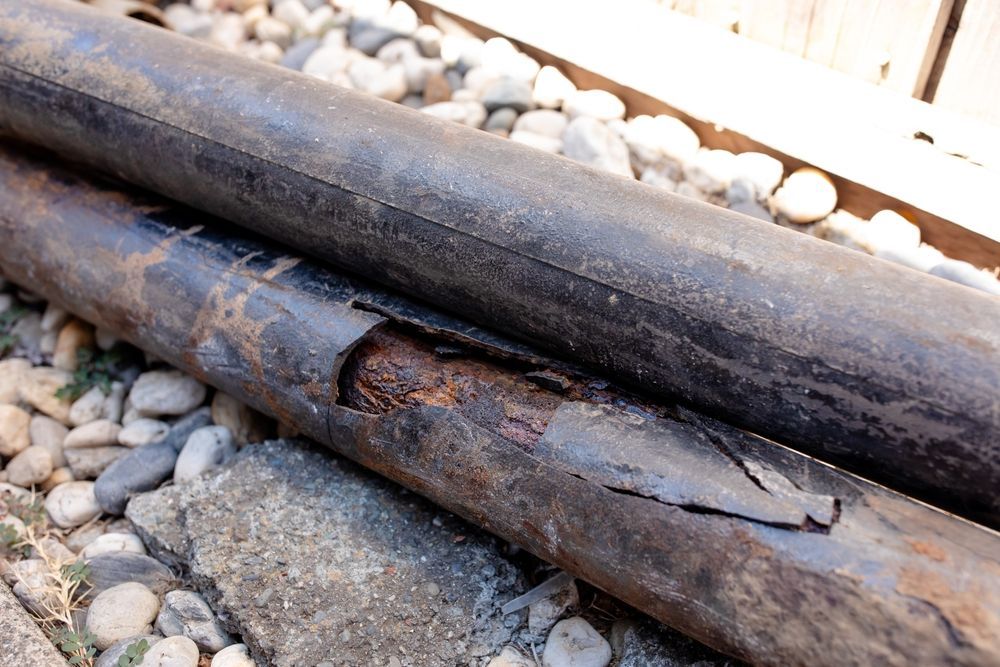
Every winter a handful of nights drop hard enough to catch Georgia homeowners out, and the phone starts ringing the following morning. What surprises people is how selective the damage is. Two houses on the same street, same age, same weather, and one has a burst pipe while the other is fine.
That is not luck. A short freeze rarely destroys plumbing that was in good condition. What it does is apply stress to the whole system at once and find whatever was already weakest. The burst is the symptom. The weakness was there in October.
In this guide
Why a mild climate is harder on pipes than a cold one
This sounds backwards until you think about how homes get built. In a region with real winters, plumbing is routed and insulated on the assumption that it will face sustained freezing every year. Pipes stay out of unconditioned space where possible, and where they cannot, they get protected properly.
Georgia construction does not carry that assumption, because for most of the year it does not need to. Supply lines run through crawlspaces, up exterior walls, into unconditioned garages and occasionally through attic space, and for forty nine weeks of the year that is entirely fine.
Then a front comes through, temperatures drop into the teens for a night or two, and every one of those runs is exposed to conditions the house was never really designed around. The pipes in the conditioned core of the home are fine. The ones in the places nobody thinks about are the ones doing the suffering.
Wind matters more than the thermometer suggests, too. A crawlspace with open vents and a cold wind moving through it gets considerably colder around the pipes than the outdoor air temperature alone would predict.
Why older pipes break and newer ones usually do not
When water freezes it expands, and the pressure that creates has to go somewhere. In a sound pipe with some material left in the wall, that pressure is absorbed. In a pipe that has already lost integrity, it is not.
Galvanized steel, common in homes built before the 1960s, corrodes from the inside out. Decades of scale build up on the interior wall, narrowing the bore and thinning the metal behind it. By the time it is sixty or seventy years old, the pipe carrying your water may have a fraction of its original wall thickness in places. A freeze finds those spots immediately.
Polybutylene, installed widely from the late 1970s into the mid 1990s, has a different problem. The material becomes brittle over time, particularly where chlorinated water has been working on it, and the fittings are frequently the first thing to give. A brittle system under freeze pressure fails at the joints.
Older CPVC grows brittle with age as well, and a rigid material that has lost its flexibility has very little tolerance for the expansion a freeze creates. Copper handles cold better than any of these, but copper that has developed pinholes or thinned from aggressive water chemistry is still a weakened pipe.
So the pattern is consistent. The freeze is the trigger. The age and material of the plumbing is the reason one house fails and the next one does not.
What a winter failure is actually telling you
This is the part worth sitting with, because the instinct after a burst is to fix that section and move on.
If a pipe failed because it was brittle, corroded or thinned, every other pipe of the same material and age in that house is in the same condition. They were installed at the same time, they have carried the same water, and they have aged identically. The one that burst was simply the one in the coldest spot.
That is why homeowners often find themselves repairing a second break a few weeks later, and a third the following winter. Each repair is sound work on a failing system. The repairs are not the problem. The system is.
A single break in an otherwise modern system is a repair. A break in sixty year old galvanized, or in polybutylene that has gone brittle, is information about the whole house. Worth asking the plumber directly: is this pipe an exception, or is it representative of what is behind the rest of my walls.
What to do before the cold arrives
The useful work happens now rather than during the freeze, and most of it is straightforward.
Insulate the exposed runs, meaning anything in a crawlspace, garage, attic or against an exterior wall. Pipe insulation is inexpensive and it buys real margin on a short freeze. Close crawlspace vents ahead of a cold front and deal with any gap letting wind in around the perimeter.
Disconnect hoses from outdoor spigots, because a hose left attached traps water in the bib where it freezes first. Know where your main shutoff is and confirm it actually turns, since discovering a seized valve during an active leak is a bad evening.
And if you know the plumbing is original to an older home, or you know the house has polybutylene, get it looked at before winter rather than after a break. An assessment in November is a conversation. The same assessment in January is an emergency with water damage attached.
About Superior Plumbing
Superior Plumbing has been working on homes since 1988, which puts more than three and a half decades behind the name. The company is owned and operated by Jay Cunningham, a licensed master plumber, and it built its reputation on a simple promise that still runs through everything we do: call the honest plumber. We answer the phone around the clock, because plumbing problems do not keep office hours.
We handle water line work, gas line repair and replacement, blue polybutylene leak repair, water heaters, fixtures and the full range of residential plumbing, and we are happy to tell you when a pipe is an isolated problem rather than selling you work you do not need. Call us at 770-422-7586, which you may also see written as 770-422-PLUM.
Pipe replacement in Kennesaw, GA
Kennesaw's housing stock spans a wide range, from homes built well before current plumbing materials existed through to subdivisions put up during the polybutylene era. That mix means a freeze here produces very different outcomes street by street depending on what is behind the walls.
Crawlspace construction is common across much of the area, which puts a meaningful share of supply lines in exactly the unconditioned space that a cold front reaches first. Homes in Kennesaw with original plumbing and vented crawlspaces are the ones where a hard freeze most often turns into a call.
You can read about the scope of what we cover on our water line repair page.
Get your pipes assessed before the first freeze
If your home still has its original plumbing, or you have had a break before, this is the right month to have someone look at it rather than waiting to find out the hard way.
Call to book a visit, or see the full range of our plumbing services.
Frequently Asked Questions
Why does a freeze break one house's pipes and not the neighbour's?
Because a short freeze rarely destroys plumbing that was in sound condition. It stresses the whole system and finds whatever was already weakest. Two houses of similar age can have different pipe materials, different routing through unconditioned space, and different corrosion histories. The one that bursts usually had a pipe that was already compromised before the cold arrived.
Which pipe materials are most likely to fail in a Georgia cold snap?
Galvanized steel from before the 1960s, which corrodes from the inside and thins over decades. Polybutylene from the late 1970s through the mid 1990s, which becomes brittle and tends to fail at fittings. Older CPVC, which grows rigid with age and tolerates expansion poorly. Copper handles cold best, though copper with pinholes is still weakened.
Why are Georgia homes more vulnerable than homes in colder states?
Construction here does not assume sustained freezing, because for most of the year that assumption is unnecessary. Supply lines commonly run through crawlspaces, exterior walls, garages and sometimes attic space without the routing and insulation that cold climate building takes for granted. Those runs are fine all year until a front drops temperatures into the teens.
Does one burst pipe mean I need my whole house repiped?
Not automatically, but it is the right question to ask. If the pipe failed because it was brittle, corroded or thinned, every pipe of the same material and age in that house is in the same condition. Ask your plumber directly whether the failed section was an exception or representative of what is behind the rest of the walls.
What should I do before winter to protect my pipes?
Insulate anything running through a crawlspace, garage, attic or against an exterior wall. Close crawlspace vents ahead of a cold front and seal gaps letting wind through. Disconnect garden hoses, since a hose left attached traps water in the spigot where it freezes first. Confirm your main shutoff valve actually turns before you need it.
Is it better to replace pipes before a break or after?
Before, considerably. An assessment ahead of winter is a planned conversation about scope and timing. The same work after a break happens under emergency conditions, usually with water damage, drying and repair costs attached that had nothing to do with the plumbing itself. The pipe is the same job either way; the surrounding circumstances are not.
Original plumbing and a vented crawlspace?
Have the exposed runs and the pipe material checked before the first hard freeze, while it is still a planned visit. Call 770-422-7586 or contact us online.
Schedule an appointment