
Read The Direction Of Travel
Moisture at a ceiling, basement edge, or crawl space low point is traced backward to determine whether it began above, below, outdoors, or at an accessible plumbing connection.


Don't Wait Till Its Too Late...Call The Honest Plumber!
Urgent Plumbing Help In Powder Springs
Heavy rain, water spreading across a basement floor, a crawl space leak, a failed sump or ejector pump, a leaking hose bib, a main shutoff that will not control the flow, an old pipe failure, or a ceiling stain that suddenly begins dripping can put a Powder Springs home at risk. Superior Plumbing helps homeowners reduce the damage, identify which plumbing system is involved, and repair the actual source instead of guessing from the wettest spot.
Call intake focuses on where water appeared, whether rain or fixture use came first, what valves or pumps are involved, and which areas should remain off-limits until the technician arrives.
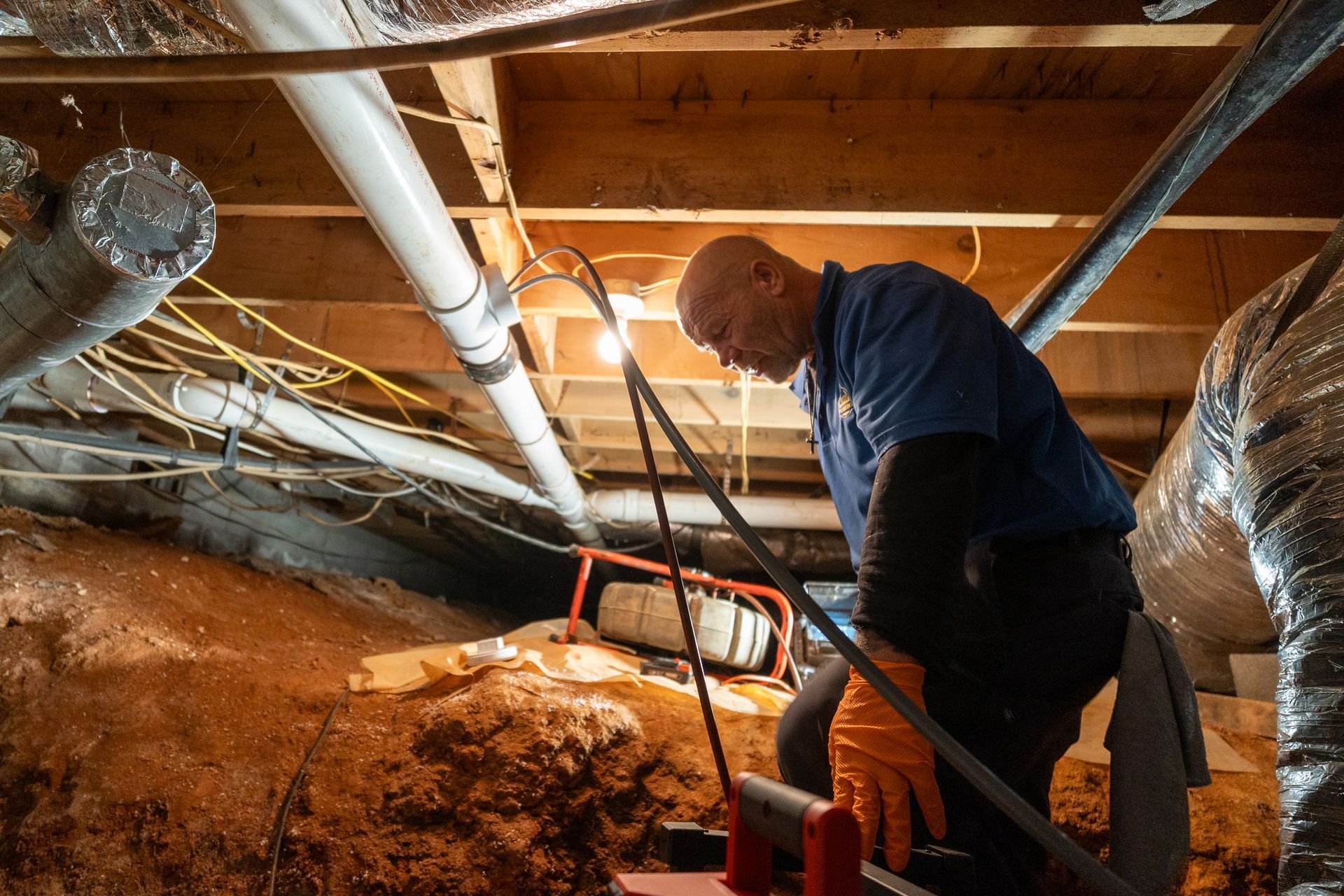




CONTROL THE WATER BEFORE CHASING THE STAIN
In Powder Springs homes, rainwater around the foundation can expose a weak sump setup, a crawl space leak may travel along framing before it becomes visible, and an old pipe can release water inside a ceiling or wall. Outdoor faucets and main shutoff valves add another layer because the visible drip may be outside while water is moving inside the structure.
The useful first move is to reduce exposure without creating a second failure. Leave affected fixtures off, avoid walking beneath a soaked ceiling, keep clear of pump wiring and standing water, and use a valve only when it turns normally. The order in which rain, pump cycling, fixture use, and visible leaking occurred gives the technician a better starting point than another test.
QUICK EMERGENCY ISSUE SORTER
Choose the closest description that matches what you're experiencing.
Choose the closest symptom for practical first steps. Keep people away from wet electrical areas and softened ceilings, stop nearby water use, and call 770-422-7586 when water is still rising, dripping, or moving through the home.
WHAT HAPPENS ON AN URGENT CALL
The place where water collects is evidence, not a diagnosis. A careful response identifies the system involved, protects vulnerable areas, and checks valves, pumps, fixtures, and accessible piping in an order that avoids unnecessary damage.
Moisture at a ceiling, basement edge, or crawl space low point is traced backward to determine whether it began above, below, outdoors, or at an accessible plumbing connection.
Pump controls, hose bibs, fixture valves, and the main shutoff are handled carefully so a stuck component, live electrical hazard, or brittle old pipe is not turned into a larger failure.
The recommendation follows the confirmed source, the condition of the surrounding material, and whether normal water use can be restored without leaving a recurring leak behind.
POWDER SPRINGS EMERGENCY PLUMBING GUIDE
Water appearing after a downpour may be entering around a foundation opening, overwhelming a pump setup, or revealing a plumbing leak that was already developing. The timing and water location matter before any repair is named.
A spreading basement puddle can involve a failed fixture, pump, valve, or interior connection. Keep people away from outlets and extension cords, and avoid walking through water to reach equipment.
Dripping below the floor can soak insulation, framing, and duct areas before it reaches a finished room. Damp soil, active pipe spray, and water following a joist each point toward a different inspection path.
A hose bib that sprays from the wall, leaks only while open, or keeps dripping after it is closed may be failing at the handle, connection, or piping behind the exterior surface.
A pump that runs continuously, will not start, cycles without moving water, or allows a basin to rise needs careful attention around electricity and potentially contaminated water.
The main valve may be difficult to reach, partly closed, corroded, or leaking at the stem. Forcing it can break the control needed to contain the emergency, so resistance is a reason to stop.
Older supply piping can split at a fitting, pinhole along a straight run, or fail when a nearby valve is operated. The surrounding pipe condition matters because one patch is not always the full answer.
A brown ring, bubbling paint, steady drip, or softened drywall can mean water is traveling from a bathroom, fixture connection, or hidden pipe above. Stay out from under a sagging area and stop water use nearby.
SIGNS TO STOP WATER USE AND STEP BACK
VISIBLE SYMPTOM, HIDDEN CAUSE
A ceiling drip may start at a fixture connection several feet away. Water in a crawl space can follow a pipe or joist before dropping. A flooded basement may reflect a pump problem, a leaking valve, or water entering from another source. Superior Plumbing compares rain timing, pump behavior, shutoff response, fixture use, moisture direction, and accessible pipe condition before deciding what needs repair.
The technician evaluates whether water use changes the symptom, whether the leak continues during dry conditions, and whether the moisture follows an interior pipe route.
Main shutoffs, hose bibs, pump switches, and local valves are inspected for normal movement, leakage, corrosion, and electrical exposure before they are operated.
Ceiling stains, crawl space drips, basement pooling, and wall moisture are compared with fixtures and piping on the level above or adjacent to the affected area.
FIVE STEPS TO A CONTROLLED RESPONSE
The response starts with safety and containment, then moves through the valves, pumps, fixtures, and piping that can prove the source. Each step is meant to restore dependable use without turning a focused emergency into unnecessary demolition.
Protect from wet electrical areas, slippery floors, soaked ceilings, and contaminated water.
Determine whether the emergency centers on rain-related flooding, a sump or ejector setup, an outdoor faucet, the main shutoff, aging pipe, or plumbing above a ceiling.
Stop nearby fixture use and inspect reachable valves, pump controls, and connections without forcing parts or crossing water to reach electrical equipment.
Repair the pipe, valve, faucet connection, pump component, fixture source, or accessible fitting supported by the inspection and testing.
Restore water or equipment operation gradually, monitor the affected area, and explain which rooms, fixtures, or controls are safe to use again.
MORE THAN A SIMPLE FIXTURE EVENT
A straightforward leak usually responds predictably when its water source is isolated. Water that keeps moving, appears on another level, or returns after a pump or valve is addressed needs a wider diagnosis.
REPAIR SCOPE
After the immediate Powder Springs emergency is contained, the repair scope should reflect the condition of the failed part and the surrounding system. Some calls are resolved at one component; others expose aging material, unreliable controls, or water travel that requires a broader correction.
Call 770-422-7586 when the Powder Springs leak, flooding, pump problem, valve failure, or ceiling drip is spreading or difficult to isolate. Superior Plumbing can separate the immediate repair from any larger correction before the scope expands.
POWDER-SPRINGS PLUMBING JUDGMENT
Powder Springs properties include homes with basements, crawl spaces, exterior hose connections, utility areas, and plumbing routed between finished levels. Those layouts can make the first visible symptom misleading: water may collect at a low point, follow framing, or appear only when a pump, fixture, or valve is used.
The repair is determined by the water path and the behavior of the plumbing, not by the ZIP code. Rain timing, pump cycling, valve response, pipe condition, and the room above a ceiling stain help distinguish a contained part failure from a problem that needs a wider correction.
METRO ATLANTA EXPERIENCE APPLIED LOCALLY
Superior Plumbing has served Metro Atlanta since 1988, giving the team decades of experience with urgent leaks, failed controls, hidden water paths, and plumbing problems that do not present the same way in every home. That history matters in Powder Springs because basement, crawl space, exterior, pump, and ceiling symptoms require different first checks.
Experience is useful only when it improves the decision. The technician should explain what is actively failing, what can be contained now, whether the surrounding plumbing is dependable, and which work is necessary before the home returns to normal use.
RELATED PLUMBING HELP
Once the active water is controlled, the follow-up service should match the failed component and the condition around it. These cards describe common repair paths without assuming every emergency requires the same work.
Urgent help for heavy-rain plumbing problems, basement flooding, crawl space leaks, pump failures, hose bib leaks, main shutoff trouble, old pipe failures, and ceiling leaks from plumbing.
Current ServiceEvaluation of pumps, floats, switches, basins, check valves, discharge connections, and controls when water is rising or equipment is not operating normally.
Repair for outdoor faucets, hose bib connections, fixture stops, and accessible valves that leak, bind, or fail to control water as expected.
Diagnosis for water moving through ceilings, walls, crawl spaces, basement areas, and other locations where the visible damage is not directly below the source.
Focused repair for accessible old pipe leaks, failed fittings, pinholes, and damaged sections after the source and surrounding pipe condition are evaluated.
Inspection of plumbing fixtures, connections, and piping above a ceiling stain, drip, or softened drywall to identify the source before surfaces are opened.
FAQs
Keep people away from outlets, panels, appliances, and extension cords. Stop nearby fixture use, note whether a sump pump is running, and do not cross standing water to reach electrical controls. The plumber will need to determine whether the water is tied to plumbing, pump equipment, or another source.
Only when the area is dry, safely accessible, and free of electrical, structural, pest, or air-quality hazards. In many cases, photographs from the access opening and information about which fixtures were used are safer and more useful than crawling toward active water.
The pump may be blocked, air-locked, unable to discharge, controlled by a failed float or switch, or undersized for the incoming flow. Keep clear of the basin and wiring, and avoid repeated resets if the control trips again.
No. A valve that is stuck, corroded, leaking, or unusually hard to turn can break and remove your ability to control the water. Stop when resistance feels abnormal and tell the plumber how far the valve moved and whether the flow changed.
A hose bib or the piping behind it can fail at a connection, split section, packing point, or wall penetration. Stop using the faucet and check the adjacent interior area for moisture without opening the wall or repeatedly operating the handle.
Not automatically. The technician should inspect the failed section and nearby material for corrosion, pinholes, brittle fittings, and previous repairs. One isolated failure may need a focused repair; repeated or widespread deterioration may justify a broader correction.
Stop water use in the rooms above, move people and belongings away, and stay clear if the drywall is sagging or the leak is near a light fixture. Do not puncture or press on a softened ceiling.
The diagnosis compares when the water appeared, whether fixture use changes it, how the pump behaves, whether the leak continues during dry weather, and whether moisture follows an interior pipe route. More than one source may be possible until those clues are checked.