
Identify The Oldest And Newest Work
Mark additions, relocated baths, repiped sections, finished basements, and equipment changes that may have created hidden transition points.


Don't Wait Till Its Too Late...Call The Honest Plumber!
Roswell Mixed-Era Plumbing Response
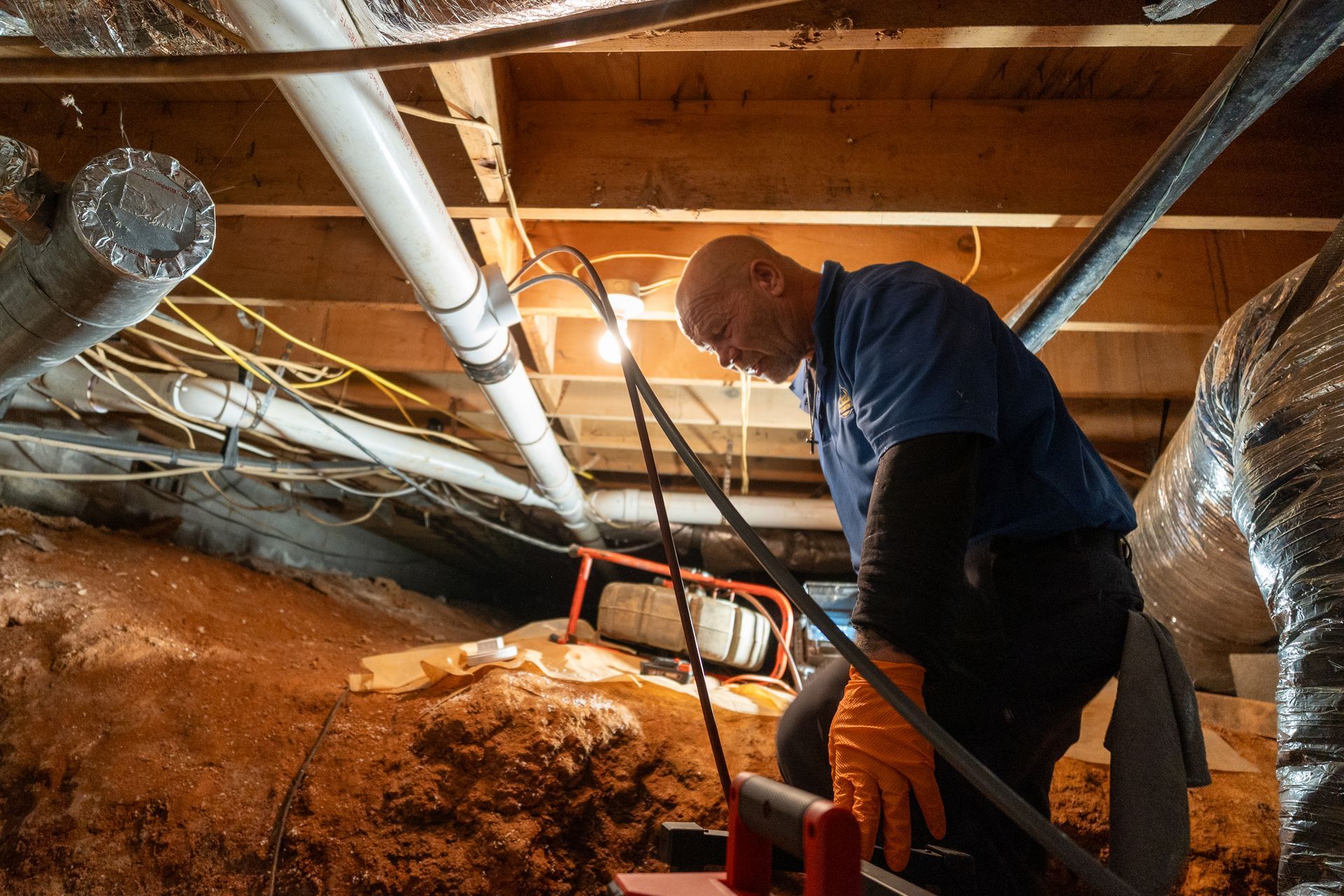
A ceiling stain below a renovated bath off Canton Street can trace to a transition hidden several feet away; a crawlspace drip in East Roswell may start at an older valve or exterior branch. Superior Plumbing approaches Roswell emergencies by mapping construction eras, water temperature, and fixture use before choosing an access point.
Phone intake stays open around the clock for concealed supply leaks, drain returns, heater releases, and shutoffs that no longer isolate the affected zone.




START WITH THE BUILDING HISTORY
Roswell properties range from historic-area houses and mid-century neighborhoods to additions, rebuilt kitchens, finished lower levels, and newer construction. A single home may contain several pipe materials, valve styles, and drain routes installed decades apart.
Emergency diagnosis is more accurate when the technician knows which rooms were altered and where the original system resumes. Once the failure is contained, that map can carry into planned plumbing work without reopening finishes simply to rediscover the route.
ROSWELL CONSTRUCTION-ERA SORTER
Choose the observation that came first. The result organizes hot versus cold piping, original versus renovated zones, drainage behavior, and the safest upstream shutoff before an on-site diagnosis.
Select the closest clue. When water is actively crossing a Roswell ceiling or wastewater is rising, keep the affected zone unused and phone 770-422-7586.
PRESERVE THE EVIDENCE
Older construction and later remodeling can separate the failure from the place where moisture becomes visible. A useful visit combines the home’s alteration history with current water behavior.
Mark additions, relocated baths, repiped sections, finished basements, and equipment changes that may have created hidden transition points.
Warmth, continuous meter demand, and fixture-triggered moisture help distinguish a hot supply, cold branch, drain connection, or equipment discharge.
Openings belong where the route and tests converge, not automatically beneath the largest stain or closest cabinet.
MIXED-ERA FAILURE PATTERNS
A fitting between older copper, newer PEX, or a relocated fixture branch can loosen, split, or leak only under a particular demand.
An old stop, gate valve, hose bib, or heater shutoff may seep at the stem or fail when turned during an urgent isolation.
A shower, tub, toilet, or branch joint can leak only while draining, allowing water to travel below tile, framing, or a finished ceiling.
An obstruction downstream of upper fixtures may first appear as gurgling or wastewater at a basement bath, floor drain, or lowest tub.
DO NOT TEST THE HOUSE RANDOMLY
TRACE THE CONSTRUCTION SEAM
Roswell’s varied building stock can place original drains beside newer supplies or route an addition through a former exterior wall. The investigation should explain how water moved from the installed system to the visible damage.
Accessible copper, PEX, CPVC, galvanized pipe, valves, and fittings reveal where different construction phases connect.
Water that continues at rest behaves differently from moisture that appears only after a tub, shower, toilet, or appliance drains.
Testing and route mapping help place access around plaster, woodwork, tile, and cabinetry with a clear repair purpose.
ROSWELL FIELD METHOD
This sequence safeguards finishes while resolving the system failure: review alterations, isolate the correct zone, prove the route, repair the supported point, and restore use deliberately.
The homeowner identifies additions, bath or kitchen moves, prior repiping, former exterior walls, and known access panels.
Hot, cold, equipment, and drain-related symptoms are separated with the smallest valve or use restriction that changes the event.
The technician compares framing, fixture positions, visible materials, stains, and accessible transitions instead of chasing water downhill.
The failed fitting, valve, pipe, trap, branch, or equipment connection is addressed where testing supports the scope.
Water and drainage return in a planned sequence while the repaired area and adjacent construction seam are observed.
BEYOND ONE ROOM
A visible leak can start at a local transition, but simultaneous changes in pressure, drainage, or hot water may show that the issue extends through a shared branch, stack, service, or equipment loop.
CHOOSE THE RIGHT SCOPE
Emergency control stops current damage. The permanent decision depends on surrounding pipe condition, support, prior repair history, and whether the renovation left the same weakness nearby.
For a Roswell property with old-to-new plumbing transitions, give the response desk the symptom history at 770-422-7586. Include the remodel history, water temperature, first affected room, and valve result.
ROSWELL BUILDING CONTEXT
Roswell’s historic district, established neighborhoods, newer subdivisions, and commercial corridors create a wide range of construction eras within one service area. Renovations can preserve original finishes while placing modern plumbing through older framing and access paths.
The Chattahoochee River and Big Creek also make water-source judgment important during severe weather. Floodwater can rise quickly, so no plumbing inspection should require entering moving water or an unsafe lower area; once conditions are safe, meter and fixture behavior can separate a private plumbing failure from outside water.
WHY THIS APPROACH FITS ROSWELL
A productive Roswell response combines urgent containment with construction-aware diagnosis. The team asks where the house changed, which water use triggered the symptom, and which valve actually altered the flow.
That method is useful for historic-area residences, renovated homes, split-level properties, finished lower floors, offices, and newer buildings where access should be chosen from evidence rather than convenience.
ROSWELL FOLLOW-ON WORK
After containment, the proven cause may require branch clearing, sewer evaluation, heater work, private supply repair, or a toilet correction. Each box identifies the likely next scope without turning the section into a link list.
Immediate control and diagnosis for transition leaks, drain returns, heater releases, aging valves, and concealed water movement.
Current ServiceRemove a restriction that appears only when a remodeled bath, kitchen, laundry, or stacked fixture group discharges.
Assess recurring lower-level backups, roots, offsets, damaged lateral sections, and cleanout access hidden by later improvements.
Address tank leakage, relief discharge, connection failures, circulation components, and hot-water movement through concealed routes.
Investigate persistent meter demand, pressure loss, and underground leakage between the public connection and the building.
Correct an overflow or poor flush while determining whether the fault is at the fixture, remodeled branch, shared stack, or building drain.
FAQS
A pressurized supply defect may remain active between uses, while a drain-side failure may appear only during a shower, tub discharge, toilet cycle, or overflow. Record the fixture used, the delay, and whether the water feels warm or cool from a safe location.
Yes. A transition can develop trouble from movement, poor support, a fitting defect, pressure stress, or nearby work. The inspection should evaluate the joint and surrounding installation rather than assuming either pipe material is automatically at fault.
Warmth narrows the possibilities to a hot branch, circulation return, heater connection, or hot fixture event, but water can travel before it drops. Temperature should be combined with shutoff and fixture-use evidence before access is chosen.
No. A brittle stem, body, or packing area can break and enlarge the leak. Use a dependable upstream valve only when it is safely accessible, and tell the technician which control would not move or would not hold.
Do not enter moving floodwater or an unsafe lower space. After conditions allow safe observation, compare the timing with rainfall, check whether private meter demand continues with all uses off, and note whether closing the building supply changes the water.
The fixtures may share a vertical stack or downstream building drain. Gurgling, rising water, or slow flow at the lowest opening suggests the restriction may sit beyond one trap, so repeated flushing can worsen the backup.
Yes. The line is monitored around the clock. Explain whether clean water or wastewater remains active, the construction changes near the problem, the water temperature, and the result of any safe shutoff already used.
Share approximate construction eras, additions, relocated kitchens or baths, prior repiping, visible pipe materials, known access panels, and the first water-use event tied to the symptom. That history helps narrow concealed transitions.