Alpharetta Sewer Line Repair & Replacement

Sewer Line Repair & Replacement Alpharetta GA

A sewer line can be failing well before there is an obvious break in the yard. One Alpharetta homeowner may first hear a toilet gurgle when the washer pumps out. Another may find sewage rising from an exterior cleanout, or learn from a camera inspection that a section of pipe is cracked, shifted, or collapsed. Superior Plumbing helps identify where the sewer lateral runs, what actually failed, how access may affect landscaping and irrigation, and whether a targeted repair, pipe bursting, or full sewer-line replacement fits the condition of the pipe.

Sewer lateral diagnosis, structural pipe evaluation, route locating, property-aware access planning, pipe bursting evaluation, targeted repair, and full sewer-line replacement for Alpharetta properties.

Gurgling & Backup Clues Sewer Lateral Route Pipe Bursting Evaluation Repair Vs. Replacement
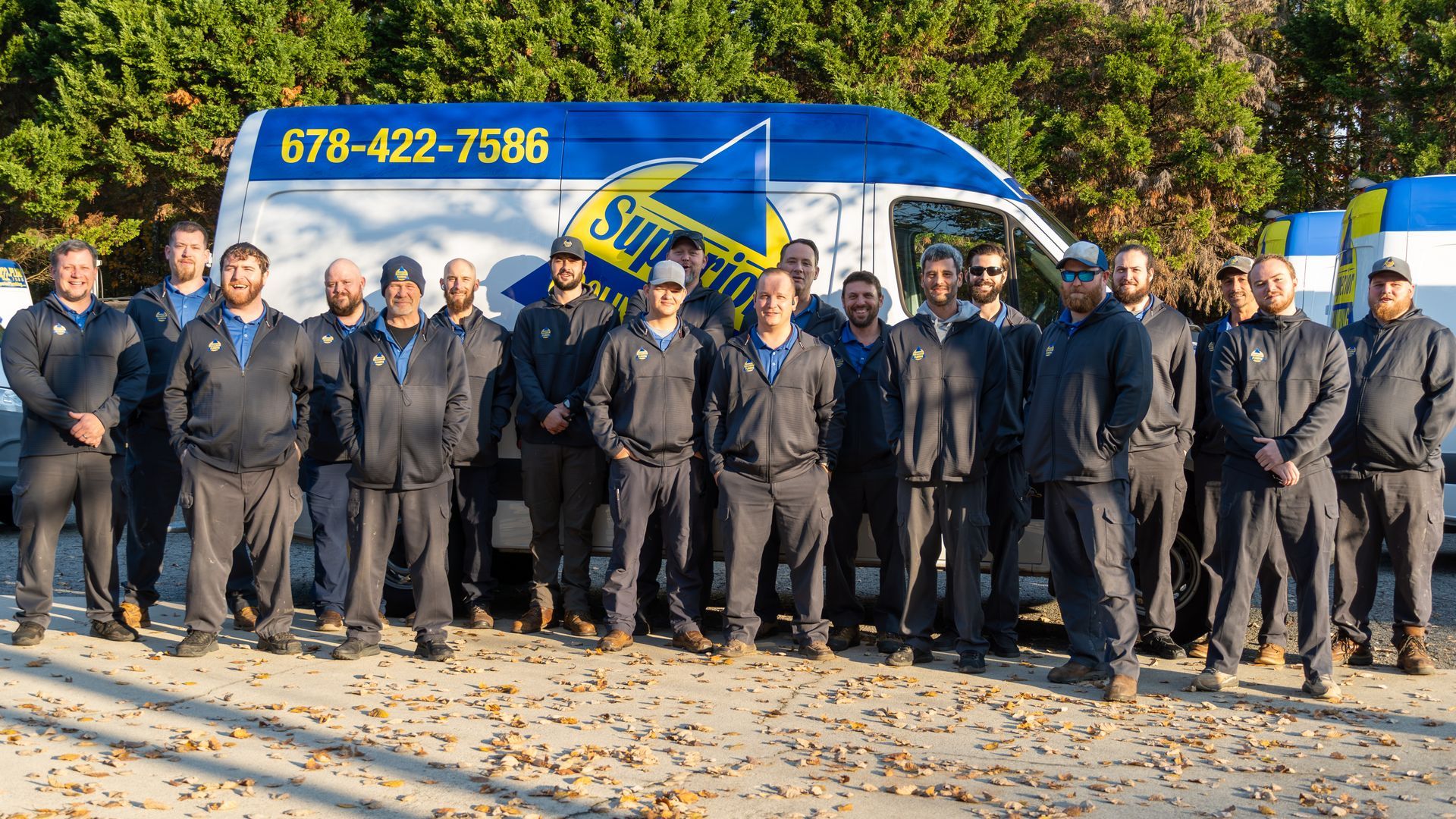
Superior Plumbing sewer line repair and replacement Alpharetta GA plumbing service truck
Not sure where the Alpharetta sewer line failed? The fixture showing the symptom may be far from the damaged section underground. Confirm the route and condition before choosing how much pipe to open or replace. Call The Honest Plumber: 770-422-7586
Superior Plumbing Alpharetta GA sewer line repair and replacement logo The Honest Plumber Straightforward sewer-line guidance Superior Plumbing BBB A Plus badge for Alpharetta GA sewer line repair and replacement Professional Plumbing Service Diagnosis before repair scope Superior Plumbing award badge for Alpharetta sewer line homeowners Metro Atlanta Experience Long-standing local plumbing service Superior Plumbing Google reviews badge for Alpharetta sewer line repair and replacement Homeowner Confidence Clear options before major underground work



Start With The Whole Sewer Path

Sewer-Line Problems Can Show Up Far From The Failed Pipe

Alpharetta properties can have sewer laterals that travel across landscaped yards, irrigation zones, mature root systems, driveways, walkways, and other finished areas before reaching the public connection. That makes the route almost as important as the symptom. A toilet that gurgles during a washer drain cycle may be reacting to a restriction farther downstream, while an overflowing exterior cleanout can show that wastewater has lost its normal path out of the property.

The first goal is to control additional discharge and identify the system involved. From there, the line can be evaluated for a localized break, a shifted joint, a collapsed section, or broader deterioration. If soil settlement has changed the pipe alignment, simply reopening the same stoppage will not correct the structural cause.

Quick Issue Sorter

Which Sewer-Line Clue Matches What You Are Seeing?

Choose the closest description that matches what you're experiencing.

Pick the closest match above. The next step should be based on how the system behaves, where the lateral runs, and what the pipe actually looks like—not on a guess from the first visible symptom.

What A Useful Service Call Should Establish

Three Questions That Keep Sewer Work From Getting Bigger Than It Needs To Be

A sewer-line visit should create enough evidence to explain the failure, the location, and the repair scope. Those are separate questions, and treating them that way helps protect the property from unnecessary work.

1

Is This One Fixture Or The Main Lateral?

The technician compares which fixtures are affected, what happens when a washer or tub discharges, and whether the exterior cleanout reacts. That pattern helps separate a localized drain issue from a restriction farther down the sewer path.

2

Where Does The Line Actually Travel?

Before access is planned, the sewer lateral route should be reconciled with cleanouts, camera distance, landscaping, irrigation, mature trees, and finished surfaces. The shortest-looking path is not automatically the real one.

3

How Much Pipe Is Structurally Compromised?

A single damaged section can lead to one kind of repair. Repeated breaks, collapse, severe displacement, or a line that no longer holds the needed slope can point toward a larger correction.

What The Symptoms Can Mean

Sewer Line Repair & Replacement Problems in Alpharetta, GA

The same sewer-line failure can create very different clues above ground. These eight situations help explain why the repair decision should follow the condition and route of the lateral rather than the loudest symptom in the house.

Pipe Bursting Fits Some Replacement Routes

Pipe bursting may be worth evaluating when an existing sewer path is suitable for pulling new pipe through the old alignment and reducing the amount of open trenching. Access points, slope, structural condition, and the route all have to support the method.

The Toilet Gurgles During A Washer Or Tub Drain Cycle

A large discharge can expose a restriction that ordinary sink use does not. Bubbling or gurgling at the toilet while another fixture empties is useful evidence that air and wastewater are struggling to move through a shared downstream path.

Cracks, Breaks, And Collapsed Pipe Change The Conversation

A structural defect is different from a soft buildup that can simply be cleared. The location, length, and severity of the failed pipe matter when deciding whether one section can be repaired or the line needs a broader replacement plan.

Finding The Sewer Lateral Route Comes Before Access Planning

The line may not run in the direction a homeowner expects. Cleanout position, camera distance, locating information, and property features help build a more reliable route before excavation points are chosen.

Landscaping, Irrigation, And Mature Trees Need A Route-Aware Plan

Finished yards can contain much more than grass. Knowing where irrigation lines, planted areas, tree roots, walkways, and other improvements sit relative to the sewer helps reduce avoidable disruption when access is required.

A Full Sewer-Line Replacement Can Make More Sense Than Another Patch

Broader replacement becomes a stronger option when failures are not isolated, the line has multiple structural defects, prior repairs are no longer solving the pattern, or correcting alignment and slope requires more than one small opening.

An Overflowing Exterior Cleanout Is A Main-Line Clue

If wastewater rises from the cleanout while plumbing is being used, the line is telling you that flow is being stopped downstream of that point. Reducing water use helps prevent more sewage from being pushed toward the overflow.

Settlement Can Shift The Sewer Line Out Of Position

When surrounding soil settles, pipe can move at joints or lose the grade needed for dependable drainage. A visible offset, sag, or changed alignment matters more than assuming every recurring stoppage is just another clog.

Warning Signs Worth Connecting

Sewer-Line Clues That Deserve More Than Another Reset

One symptom can be easy to dismiss. A pattern is harder to ignore. Pay attention to what happens at the same time and whether the symptom returns after the line has already been opened or cleared.

  • The toilet bubbles or gurgles specifically when the washer pumps out or the tub drains.
  • The exterior sewer cleanout rises, spills, or shows standing wastewater during normal fixture use.
  • Several low fixtures become sluggish together instead of one sink or tub acting alone.
  • A camera view shows a crack, separated joint, displaced section, or collapse.
  • Soft, sunken, or persistently damp ground develops along the likely sewer route.
  • The same main-line stoppage returns after temporary flow has been restored.
  • The route appears to cross landscaping, irrigation, or mature trees and the access path is still uncertain.
  • Pipe alignment or slope appears to have changed where the surrounding ground has settled.
Call For Sewer Line Repair & Replacement Help
When The Cleanout Is Overflowing, Adding More Water Adds More Sewage

Pause laundry, bathing, dishwasher cycles, and other heavy discharges until the line is evaluated. Keeping people and pets away from contaminated areas is more useful than repeatedly testing whether the blockage has moved.

Call 770-422-7586

Follow The Flow, Then Find The Failure

The Fixture Making Noise Is Not Necessarily Where The Sewer Pipe Failed

A toilet can gurgle because a restriction is farther down the main lateral. An exterior cleanout can overflow because the stoppage is beyond the cleanout. Odor or wet ground can surface where wastewater finds an escape path rather than directly over the damaged pipe. That is why symptom location alone is a poor excavation map.

Diagnosis should connect fixture behavior, cleanout behavior, camera evidence, distance, pipe alignment, and the route across the property. Those clues help distinguish a localized obstruction from a cracked, shifted, or collapsed section that needs structural correction.

1

Fixture Sequence

Which fixture is used first, which one reacts, and whether the reaction happens only during a large discharge can narrow where the shared restriction is likely to be.

2

Camera Distance And Condition

A structural finding is more useful when its distance and position can be tied back to the property, not just described as “somewhere underground.”

3

Route And Surface Features

Landscaping, irrigation, trees, hardscape, cleanouts, and changes in grade help translate underground findings into a practical access plan.

From Symptom To Safe Use

How Superior Plumbing Works Through An Alpharetta Sewer-Line Problem

The sequence matters. The goal is to reduce exposure first, understand what part of the drainage system is involved, prove the structural cause, and then match the repair scope to that evidence.

  1. 1

    Protect People And Finished Areas

    Protect from wet electrical areas, slippery floors, soaked ceilings, and contaminated water. For a sewer backup, keeping people and pets away from sewage and limiting new water discharge are the immediate priorities.

  2. 2

    Identify The Drainage Path Involved

    Compare toilets, tubs, showers, laundry discharge, and the exterior cleanout to determine whether the symptom is isolated or tied to the main sewer lateral.

  3. 3

    Locate The Route And Failure

    Use cleanout access, camera findings, distance, and property features to understand where the line runs and where structural damage or displacement is occurring.

  4. 4

    Match The Correction To The Cause

    Choose a focused section repair when the damage is truly isolated. Compare broader replacement or pipe bursting when the condition, alignment, route, and access make a larger correction more dependable.

  5. 5

    Verify Flow Before Normal Use

    After the work, confirm that wastewater is moving through the repaired path as intended and explain when normal fixture, laundry, and bathing use can resume.

When It Is Bigger Than One Clogged Fixture

These Symptoms Point Farther Down The Sewer System

A single fixture can have a local problem. The clues below are different because they suggest that flow is being restricted, redirected, or structurally interrupted after multiple drains have already joined the same sewer path.

  • The cleanout overflows while toilets, tubs, or laundry are being used inside.
  • A toilet gurgles only when another high-volume fixture discharges.
  • Several fixtures react in sequence instead of one drain staying isolated.
  • A camera cannot pass a collapsed section or shows obvious structural separation.
  • The pipe has shifted enough to create a visible offset, sag, or poor drainage grade.
  • Temporary clearing restores flow, but the same whole-line symptoms return.
Repeated Flow Problems Need A Cause, Not Just Another Temporary Opening

If a broken, collapsed, or displaced pipe is creating the restriction, restoring flow for the moment does not restore the structure. The repair decision should account for what the camera shows and whether the rest of the lateral can support a targeted fix.

Repair Scope Should Follow The Evidence

How Superior Separates One Failed Section From A Sewer Line That Needs A Broader Correction

Repairing less pipe is not automatically better if the remaining line is structurally compromised. Replacing more pipe is not automatically better if one defined section is the only failure. The stronger recommendation is the one that matches the evidence.

Targeted Repair

When One Defined Section Is The Problem

  • The break, crack, or separated joint is localized and can be tied to a specific point on the route.
  • Pipe upstream and downstream appears structurally sound enough to keep in service.
  • The existing grade is still workable beyond the damaged area.
  • Access can reach the failed section without opening substantially more of the property than the repair requires.
  • The history does not show repeated structural failures at several locations along the lateral.
Larger Sewer Line Repair & Replacement Correction

When The Line Is Failing As A System

  • Camera findings show multiple structural defects, severe displacement, collapse, or deterioration across more than one section.
  • Settlement has changed alignment or grade in a way one small repair cannot correct.
  • Recurring backups and cleanout overflow continue because the structural cause extends beyond one access point.
  • The property impact of repeated future openings would be greater than planning one broader correction now.
  • Pipe bursting can be evaluated when the existing route, access points, condition, and required alignment make it a suitable replacement method.

Local Judgment Means Property-Specific Judgment

Why Sewer Route And Property Access Matter In Alpharetta

Alpharetta sewer work should not be planned from a generic city assumption. The useful local context is the actual property in front of the technician: where the cleanouts sit, how far the lateral travels, whether it passes near mature trees or irrigation, what finished surfaces are in the route, and whether settlement has changed the pipe position.

That property-specific view matters when comparing excavation points, a focused repair, full replacement, or pipe bursting. A route that protects one landscaped area may create a worse access problem somewhere else, so the entire path needs to be understood before the repair method is chosen.

Surface Clues Do Not Draw The Sewer Map

A wet patch, odor, or cleanout location helps the investigation, but camera distance and route locating are what connect the underground failure to a practical access point.

Alpharetta, GA Service-Area Context

This map identifies Alpharetta for service-area context. An individual property's sewer lateral route must be located on site and cannot be inferred from a city map.

Straight Answers Before Major Underground Work

A Plumbing Company Built Around Honest Answers, Not Guesswork

Superior Plumbing has served Metro Atlanta for decades, but longevity only matters if the homeowner gets a useful answer on the job in front of them. For an Alpharetta sewer line, that means explaining what the symptoms prove, what the camera shows, where the lateral runs, how the property may be affected, and why one repair option is being recommended over another.

The point is not to make every sewer problem sound like a full replacement. It is to give the homeowner enough evidence to understand when a smaller correction is reasonable, when a larger repair is justified, and when pipe bursting deserves consideration because of the route and access.

Evidence Before Scope Fixture behavior, cleanout response, camera condition, distance, and route are connected before the repair size is discussed.
Alternatives Explained A focused repair, broader replacement, and pipe bursting are compared by fit—not presented as interchangeable labels.
Property Impact Included Landscaping, irrigation, mature trees, access points, and finished surfaces are part of the planning conversation.
Metro Atlanta History Long-standing plumbing experience supports the judgment needed when the failure is underground and the access decision matters.
A Clear Next Step The homeowner should leave the diagnosis understanding what failed, where it failed, and what happens next.
Approach Diagnosis Before Guessing
Service Sewer Line Repair And Replacement
Location Alpharetta And Metro Atlanta

Related Plumbing Services

Not every slow drain or noisy toilet means the underground lateral needs structural work. These services help separate localized fixture and drain problems from a sewer-line failure.

Sewer Line Repair & Replacement Alpharetta GA

For cracked, broken, collapsed, shifted, or repeatedly failing sewer laterals, including route planning, targeted repair, pipe bursting evaluation, and full replacement.

Current Service

Drain Cleaning

For stoppages and slow drains where the pipe is structurally sound and the issue can be resolved by clearing the obstruction.

Sewer Camera Inspection

For viewing accessible sections of the sewer path and documenting roots, offsets, cracks, buildup, sags, or collapse before repair scope is chosen.

Toilet Repair

For a toilet that has a localized flushing, fill, seal, or internal component problem rather than a reaction to the main sewer lateral.

Plumbing Repair

For interior drain, fixture, vent, and piping problems that need to be separated from a failure in the underground sewer route.

Fixture & Drain Troubleshooting

For symptoms that appear at one sink, tub, shower, or fixture and need diagnosis before assuming the whole sewer line is involved.

Alpharetta Sewer Line FAQs

Questions Homeowners Ask Before Sewer-Line Repair Or Replacement

These answers focus on the symptom patterns, structural findings, route questions, property protection, and replacement decisions covered on this Alpharetta page.

Why does my toilet gurgle when the washer drains?

A washer releases a relatively large volume of water in a short period. If the shared downstream path is restricted, displaced air and wastewater can make a toilet bubble or gurgle. The useful clue is the timing: if the toilet reacts when the washer or tub discharges, the technician should evaluate the shared drainage path rather than assume the toilet itself is the only problem.

What does it mean when the exterior sewer cleanout is overflowing?

Wastewater reaching the cleanout but not continuing downstream usually means flow is being restricted beyond that point. Limit new water use so more sewage is not forced out of the cleanout, keep people and pets away from the contaminated area, and have the downstream lateral evaluated.

How do you find where the sewer lateral runs across an Alpharetta property?

Cleanout locations, camera distance, locating information, visible plumbing layout, and property features are used together to establish the likely path. The route should be confirmed as closely as practical before deciding where to access the pipe, especially when landscaping, irrigation, mature trees, or hardscape may be involved.

Can pipe bursting reduce digging during sewer-line replacement?

It can on a suitable line. Pipe bursting uses the existing pipe path while pulling new pipe into place, which may reduce the amount of open trenching. It is not automatically the right method: access points, existing alignment, slope, pipe condition, and the replacement route all need to fit.

How can sewer work be planned around irrigation, landscaping, and mature trees?

The route and access points should be established before the yard is opened. That lets the repair plan account for planted areas, irrigation zones, roots, walkways, and other improvements. Some disturbance may still be necessary because the pipe is underground, but knowing the route helps avoid unnecessary openings.

Does ground settlement always mean the full sewer line needs replacement?

No. Settlement matters because it can shift joints, create offsets, or change slope. Whether that calls for a focused repair or a larger correction depends on how much of the line moved, whether the remaining pipe is sound, and whether proper drainage can be restored by correcting one defined section.

When does full sewer-line replacement make more sense than a section repair?

Replacement becomes a stronger option when structural failures occur at multiple points, a long section is collapsed or badly displaced, alignment and grade need broader correction, or repeated repairs would leave other known weak sections in place. The decision should follow the condition of the entire accessible line, not simply the age of one broken section.

What camera findings suggest a structural sewer repair may be needed?

Clear cracks, separated joints, displaced sections, severe sags, broken pipe, or collapse are structural findings. A camera image should also be tied to distance and route so the homeowner understands where the defect is and whether it is isolated enough for a targeted repair.