Confirm The Pattern Before Digging
Which fixtures react, how quickly the clog returns, where odor appears, and what previous clearing accomplished all help separate a branch issue from a recurring main-line problem.

Don't Wait Till Its Too Late...Call The Honest Plumber!
Atlanta Sewer Line Repair & Replacement
A sewer problem that keeps returning deserves more than another guess at the clog. Ground movement can shift buried pipe, joints can separate, a deep line can complicate access, and sewage odor may be the first clue that wastewater is not staying where it belongs. Superior Plumbing helps Atlanta homeowners and property managers trace the failure, determine the sewer-line route and depth, account for buried utilities and easements, and decide whether a focused repair or a larger correction is justified before the ground is opened.
Sewer-line diagnosis, depth and route planning, recurring main-line clog evaluation, joint-failure repair, utility-aware excavation planning, and replacement guidance across Atlanta and Metro Atlanta.
 The Honest Plumber
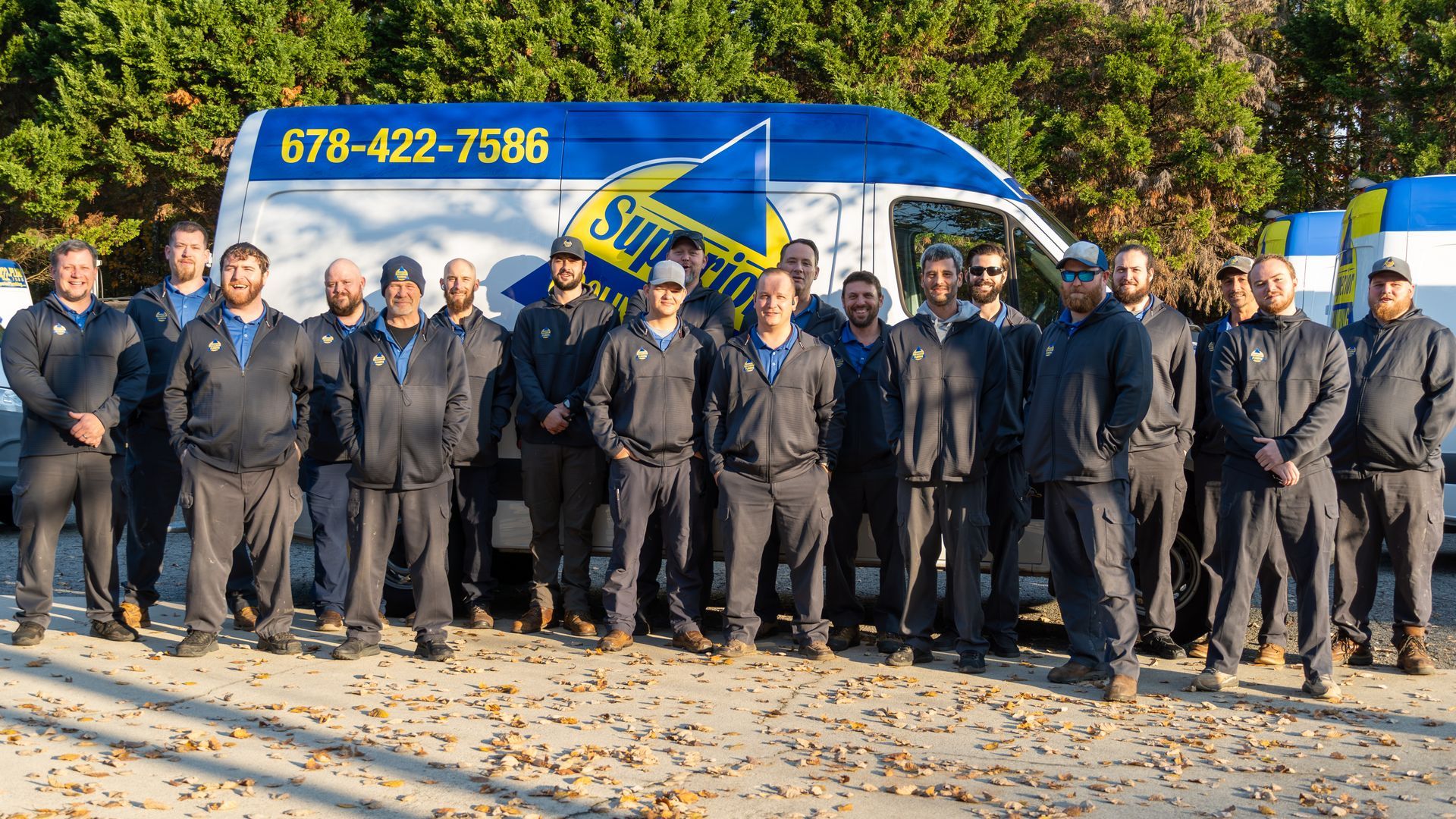
Serving Atlanta and Metro Atlanta
The Honest Plumber
Serving Atlanta and Metro Atlanta
 Professional Plumbing Service
Diagnosis before repair scope
Professional Plumbing Service
Diagnosis before repair scope
 Metro Atlanta Experience
Serving the area since 1988
Metro Atlanta Experience
Serving the area since 1988
 Clear Homeowner Guidance
Know why the repair is recommended
Clear Homeowner Guidance
Know why the repair is recommended
Start With The Failure Pattern
Atlanta properties can put a sewer lateral beneath lawns, driveways, landscaped areas, parking surfaces, utility paths, or easements. The visible symptom does not tell you the line depth, the exact failure point, or whether the problem is isolated. A clog that returns after clearing may come from a structural restriction. Odor can travel away from the damaged section. Ground settlement may move a joint without leaving an obvious surface break.
Superior Plumbing looks at fixture behavior, prior stoppages, cleanout access, pipe condition, route, depth, joint alignment, surface clues, utility conflicts, and practical excavation access before defining the work. That keeps the conversation centered on the cause and the least disruptive repair that can reasonably solve it.
Quick Issue Sorter
Choose the closest description that matches what you're experiencing.
Pick the closest match. The goal is to narrow the next check, not to diagnose an underground sewer failure from a button.
What Happens Before A Recommendation
The technician's job is not to turn every backup into a replacement. The useful work happens before that decision: establish the pattern, locate the likely failure, understand what is above and around the pipe, and explain what each repair path would actually solve.
Which fixtures react, how quickly the clog returns, where odor appears, and what previous clearing accomplished all help separate a branch issue from a recurring main-line problem.
A repair plan changes when the sewer is deeper than expected, runs beneath hardscape, crosses an easement, or sits beside other buried services. Those details belong in the plan before excavation starts.
An isolated offset may support a focused correction. Several damaged joints, recurring structural restrictions, or a route made difficult by settlement can justify a broader conversation. The evidence should drive that distinction.
What The Underground Problem Can Look Like
The same sewer symptom can come from very different underground conditions. These are the issues that change how Superior Plumbing thinks through access, repair scope, excavation, and the likelihood of the problem returning.
Soil movement can pull buried pipe out of alignment, change slope, or stress a joint. A settled area over the route matters more when it appears with repeat stoppages, odor, or a known offset.
Depth affects safe access, excavation volume, shoring considerations, equipment choice, and restoration. It should be established as part of planning instead of discovered after a large opening has already been made.
Some failures need direct access. A badly shifted section, a joint that must be reset, unsuitable access, or a condition that cannot be corrected in place may make a controlled open excavation the practical option.
Odor may show up far from the exact defect. Interior sewer smell, outdoor odor over the lateral, or odor that returns with heavy fixture use can justify checking the main sewer path rather than masking the smell.
A joint can open, offset, or shift enough to catch waste and reduce reliable flow. That is a structural problem, not simply a clog, and the amount of damaged pipe around it helps determine the repair scope.
Utility paths and easement limits can control where equipment can sit, how a trench is approached, and which areas must remain protected. Access planning is part of the sewer repair, not an afterthought.
Price and schedule depend on more than pipe length. Depth, access, pavement or landscaping above the route, joint condition, utilities, easements, excavation needs, inspections, and restoration can all change the job.
Repeated clearing without a lasting result can be the clue that something structural is narrowing or catching flow. The next useful question is why the line keeps stopping, not how many times it can be opened again.
Do Not Ignore A Pattern That Keeps Building
One slow fixture can have a local cause. The case for investigating the sewer lateral gets stronger when several clues line up or the same problem returns after it was supposedly cleared.
Diagnosis Before Excavation
Wastewater follows the available path. A toilet may gurgle because the restriction is farther downstream. Odor may escape at one point even though the joint failure sits somewhere else. A surface depression can suggest settlement but still needs to be compared with the actual route of the lateral.
Superior Plumbing uses the symptom pattern together with cleanout access, camera evidence when useful, route and depth information, joint condition, and property constraints to narrow the failure. The point is to avoid opening the wrong area or treating a structural defect like a simple stoppage.
Several fixtures reacting together can help show that the restriction is downstream in the main path rather than at one isolated drain.
Offsets, separations, settled sections, and recurring catch points matter because clearing waste does not realign damaged pipe.
Depth, route, utilities, easements, and what sits above the sewer determine where safe access is practical before excavation is recommended.
How The Response Is Organized
The process should reduce exposure first, identify the system involved, account for underground constraints, correct the actual cause, and verify that normal use is appropriate again.
Protect from wet electrical areas, slippery floors, soaked ceilings, and contaminated water. Keep people and pets away from sewage and reduce water use when a backup is active.
Check which fixtures react, how the main line behaves, where odor appears, and what prior clearing or repair work changed.
Establish the likely route and depth, review cleanout access, and account for utilities, easements, hardscape, landscaping, and safe equipment access.
Match the repair to the failed joint, shifted section, structural restriction, or broader line condition instead of treating every problem as the same job.
Confirm flow, review the repaired area, and explain what was changed before the household or property returns to normal sewer use.
When The Problem Looks Bigger Than One Fixture
A single clogged sink does not automatically mean the buried lateral has failed. Escalation makes more sense when the problem affects the system as a whole, returns after clearing, or lines up with structural or ground clues.
They do mean the technician has more evidence to reconcile. The right scope still depends on where the failure is, how much of the line is affected, whether the remaining pipe is serviceable, and what access is required to make a dependable correction.
Target The Failed Area Or Correct More Of The Line
Repair scope should follow the condition of the pipe, not the size of the sales pitch. An Atlanta property with one accessible failed joint is a different job from a line with repeated structural restrictions, multiple offsets, or a settled run that cannot maintain dependable flow.
Atlanta Property Access Changes The Plan
Atlanta is not one property type. A sewer repair may be approached from a tighter residential parcel, a larger lot, a multifamily property, or a site where pavement, parking, landscaping, shared access, or an easement limits where the work can happen. Those are planning differences, not reasons to guess at local pipe conditions.
Superior Plumbing evaluates the sewer serving the actual property: how deep it is, where it runs, what crosses it, whether settlement has affected alignment, and how much access a repair needs. That property-level information is what turns an underground problem into a workable repair plan.
A shallow, open-yard repair and a deep repair near hardscape, utilities, or an easement do not carry the same excavation, safety, restoration, or scheduling requirements.
Experience That Helps With The Decision
Superior Plumbing has been serving Metro Atlanta since 1988. For Atlanta sewer-line work, that history matters most when it produces better judgment: listen to what has already happened, verify the underground conditions, explain why access is needed, and give the homeowner a repair scope that can be understood before work begins.
Related Plumbing Services
Not every recurring drain symptom starts with a failed sewer lateral. These services cover the adjacent checks and repairs that can help distinguish an isolated plumbing problem from an underground main-line issue.
For recurring main-line failures, shifted or separated joints, settlement-related damage, excavation planning, and sewer correction when the buried line is the source.
Current ServiceFor clogs and slow drains where the goal is to restore flow and determine whether the stoppage behaves like an isolated blockage or a repeating main-line pattern.
For viewing accessible interior pipe conditions that may reveal offsets, separations, recurring catch points, or other clues before repair scope is discussed.
For interior pipe, drain, valve, fixture, and connection problems that can create symptoms separate from a buried sewer-lateral failure.
For localized toilet or fixture problems where only one point is affected and the rest of the drainage system is behaving normally.
For checking accessible cleanout locations and how they can support diagnosis, clearing, route planning, and confirmation of main-line behavior.
Atlanta Sewer Line Repair & Replacement FAQs
These answers focus on the underground conditions that most often change the repair conversation: repeat stoppages, settlement, depth, excavation, odor, joint alignment, utilities, easements, cost, and timing.
A clearing can restore flow without correcting the reason material keeps catching. A misaligned joint, separated connection, shifted section, or other structural restriction can create a repeat point. When the clog returns, the next step should focus on identifying that cause rather than assuming every stoppage is a new blockage.
Yes. Movement around buried pipe can change alignment, slope, or joint position. Settlement by itself does not prove the sewer is damaged, but it becomes more meaningful when it lines up with the sewer route and occurs with repeat clogs, odor, or inspection evidence of an offset.
The technician combines known cleanout or pipe access, route information, locating methods when appropriate, and the property's grade to plan the work zone. Exact methods depend on the site, but depth should be addressed before excavation because it affects access, equipment, safety planning, soil removal, and restoration.
Open excavation can be necessary when the failed pipe must be directly exposed, the alignment needs physical correction, access cannot support another repair approach, or the damaged section's condition makes direct replacement the practical choice. The reason for opening the ground should be tied to the actual failure and route.
Sewer odor can come from several sources, so location matters. When fixture-level causes are ruled out, persistent odor along with slow drainage, repeat main-line stoppages, or an outdoor smell over the lateral can justify evaluating the main sewer path for leakage, poor flow, or structural damage.
It means two pipe sections are no longer meeting as intended. Even a partial offset can reduce the smooth interior path, catch waste, or allow leakage around the connection. Whether one joint can be repaired or a longer section should be corrected depends on the surrounding pipe condition and alignment.
They can restrict digging locations, equipment access, trench approach, and restoration. A sewer route near other buried services or within an easement needs to be planned around those constraints so the work zone is not chosen solely because it looks easiest from the surface.
Length matters, but it is only one factor. Depth, location, joint condition, excavation needs, utilities, easements, pavement or landscaping above the route, access for equipment, inspections, weather, and restoration can all affect price and schedule. A useful estimate follows a defined scope rather than a generic per-foot assumption.