Why Does My Water Heater Run Out of Hot Water?
Short showers usually trace back to a handful of causes, and most of them can be pinned down before anyone buys parts.
Schedule an appointment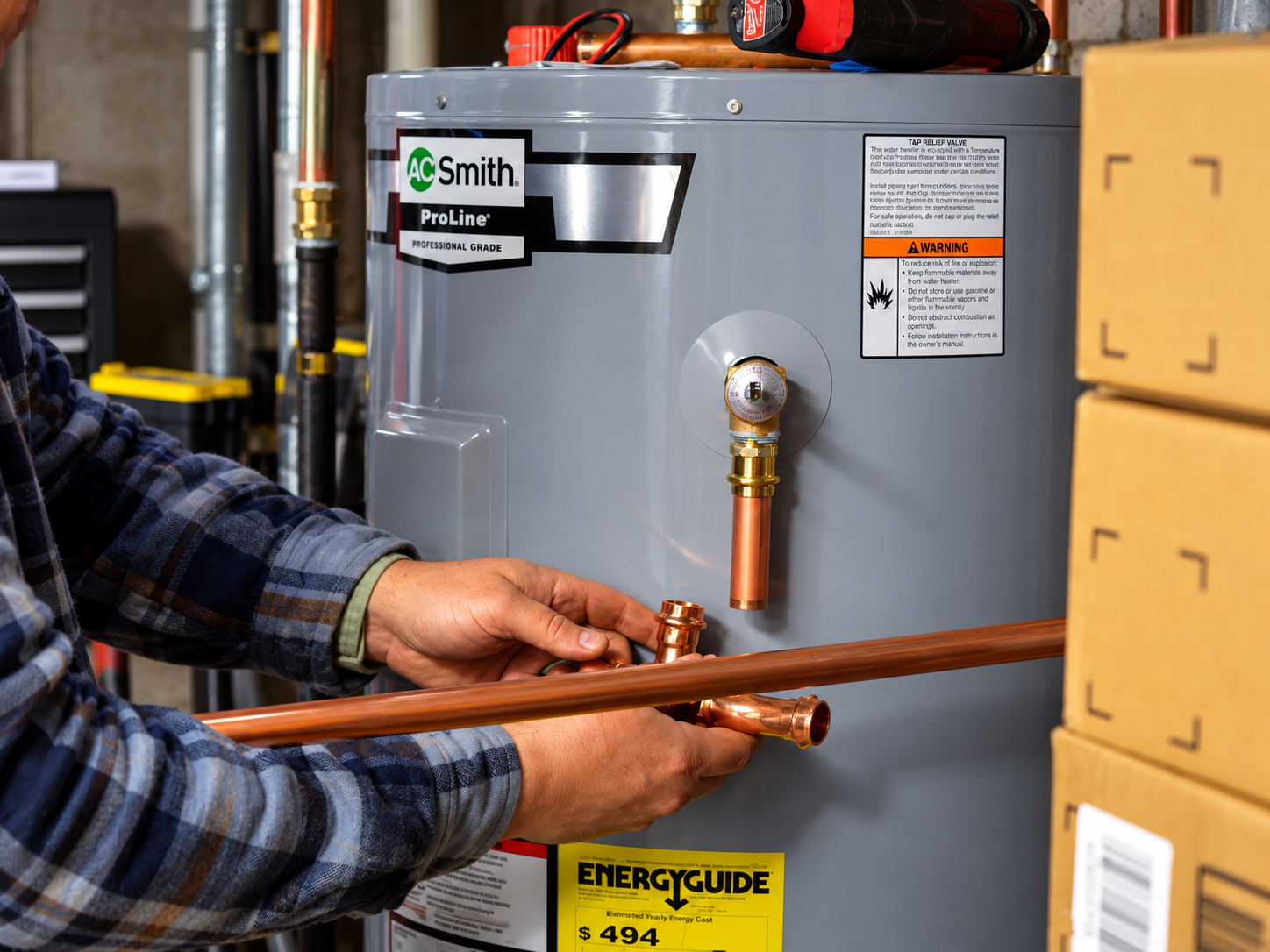
A water heater usually runs out of hot water early for one of four reasons: sediment has built up in the bottom of the tank, a heating part has failed, the dip tube that carries cold water to the bottom has broken, or the household now uses more hot water than the tank was sized for. Cold weather makes every one of those problems show up faster, because the water coming into the tank starts out colder.
In Marietta, that often means a shower that lasted fine in September goes lukewarm for the second person in line by November. The tank didn't shrink. It's losing a race it used to win.
Some of these causes take five minutes to rule out, and some need a plumber with test equipment. A short shower that also comes with rusty water or a rumbling tank points somewhere very different from one that is simply short.
In this guide
Sediment Steals Space in Older Tanks
Sediment is the most common reason an older tank water heater runs short. As water heats, minerals and fine grit settle out and collect on the bottom of the tank, right where the gas burner or the lower electric element does its work.
That layer causes two problems at once. It takes up room that used to hold water, so the usable supply shrinks. It also sits between the heat source and the water like a blanket, so the heater runs longer to warm the same amount. On a gas unit you may hear popping or rumbling as pockets of water trapped under the sediment boil. On an electric unit, the lower element can end up buried and burn out early.
Flushing the tank helps when the buildup is moderate. When a tank has gone many years without a flush, the sediment can harden into a crust, and a flush may stir it up without clearing it. That's one reason the heater's age matters so much when you're deciding what to do next.
Could a failed part be the cause?
Yes, and which part depends on whether your heater runs on gas or electricity. A failed part usually causes a sudden change, while sediment causes a slow fade, so think about whether the short showers crept up over months or showed up one morning.
Electric heaters
Most electric tanks have two heating elements, one near the top and one near the bottom, each with its own thermostat. The upper element heats first and then hands off to the lower one. If the lower element burns out, you still get hot water, but only the top portion of the tank gets heated, so the supply runs out far sooner than it used to. A bad thermostat or a tripped high-limit switch can cause the same pattern.
Gas heaters
On a gas tank, a dirty burner, a burner that isn't getting enough air, or a weak thermocouple (the small safety sensor that tells the gas valve the pilot is lit) can keep the water from reaching full temperature. Gas parts are a job for a professional, because a wrong adjustment can create a safety hazard.
The dip tube
The dip tube is a plastic pipe inside the tank that carries incoming cold water down to the bottom. When it cracks or breaks off, cold water pours in near the top, right beside the hot water outlet. Your shower cools quickly even though the bottom of the tank is still full of hot water. Small bits of white plastic caught in faucet aerators are a common clue.
When the Tank Is Simply Too Small for the House
Sometimes nothing is broken. The heater works fine, and the household has outgrown it. A new baby, a teenager who takes long showers, a parent moving in, or a new soaking tub can push daily demand past what the tank was sized for.
The number to look for is the first-hour rating, usually listed on the tank's label. It tells you how many gallons of hot water the heater can deliver in an hour, starting with a full tank. If your busiest hour (back-to-back showers plus a dishwasher cycle) needs more than that, you'll run short no matter how healthy the heater is.
Spacing out showers and running the dishwasher overnight buys some breathing room. For a lasting fix, the options are a larger tank or a tankless water heater, which heats water as it flows and doesn't run out the way a tank does. Tankless units have their own limit, though. They're sized by how many gallons per minute they can heat, so one that's too small will turn lukewarm when two showers and a washing machine run together.
How to Narrow It Down Before You Call
A few simple observations tell a plumber a lot, and none of them involve opening the heater or touching wiring or gas parts.
- Note when it started. A sudden drop points toward a failed part, and a slow fade over months points toward sediment or growing demand.
- Time a hot shower from start to lukewarm, and compare it with what you remember from last year.
- Stand near the tank while it heats. Popping or rumbling suggests sediment.
- Check faucet aerators for tiny white plastic flakes, which suggest a broken dip tube.
- Read the label for the tank's size and first-hour rating, and look for the manufacture date, which many brands build into the serial number.
- Look at the floor around the tank for water or rust. A leak from the tank itself changes the conversation entirely.
If the heater is older and showing more than one of these signs, get a professional opinion before buying parts. You can compare tank repair and replacement options on the water heater services page.
How Superior Plumbing Tracks Down a Short Hot Water Supply
Superior Plumbing uses advanced diagnostics instead of guesswork. That matters with this problem, because sediment, a burned-out element, and a broken dip tube can feel exactly the same from inside the shower. Testing the parts first means you pay to fix the real cause.
The company's motto is "Call The Honest Plumber," and with water heaters that means a plain answer about whether a repair will buy several more good years or whether the tank is near the end, with the reasons laid out.
Superior Plumbing works on both standard tank and tankless water heaters, so its advice isn't tied to selling one type. If the real problem is that your household has outgrown its tank, both choices can be compared side by side.
Cold Months and Older Homes Make It Worse
Winter is when Marietta households tend to notice this problem. The water arriving through underground supply lines is much colder in January than in August, so the heater has to raise every gallon further. A tank that kept up all summer can fall behind once the cold sets in, especially if sediment has already cut its efficiency.
Many homes around the city were built when families were smaller and bathrooms were fewer. Plenty of them now have an added bathroom, a bigger tub, or more people under one roof, while the water heater in the garage is the same size the builder chose decades ago.
Heaters in garages and unfinished basements also lose heat faster on cold nights because they sit in unheated air, and so do the hot water pipes running from them. Insulating exposed pipes near the tank is a small, low-cost step that holds on to more heat through the coldest weeks.
Find the Cause Before You Replace Anything
Run through the checklist above, then schedule a diagnostic visit so a plumber can test the heater's parts instead of guessing. If you're deciding who to hire for water heater trouble in Marietta, Superior Plumbing will test before recommending anything and tell you plainly whether a repair or a new heater makes more sense. Describe what you're seeing at 770-422-7586; calls are answered 24/7.
Hot Water Questions, Answered Plainly
How long should a tank of hot water last in the shower?
It depends on the tank size, the showerhead, and how hot you like the water. A 40 or 50 gallon tank with a standard showerhead usually covers a couple of back-to-back showers before it needs time to recover. If one person now drains it, and that didn't happen a year ago, something has changed inside the tank or in how the household uses hot water.
Will turning up the thermostat give me more hot water?
A little, because hotter water in the tank gets mixed with more cold water at the faucet. The tradeoff is a higher scald risk, especially with young children or older adults in the house, plus faster sediment buildup and higher energy use. Many households settle around 120 degrees. If the tank can't hold its setting at all, raising it won't solve the underlying problem.
Is it safe to flush my water heater myself?
Many homeowners do it, but an older tank carries real risks. A drain valve that has never been opened can stick, snap, or refuse to close, and hardened sediment can clog it halfway through. You'll also be handling scalding water. If the tank is more than a few years old and has never been flushed, having a professional do the first one is the safer route.
Can a tankless water heater run out of hot water?
Not in the way a tank does, since it heats water as it flows through. What it can do is hit its flow limit. Each unit can only warm so many gallons per minute, and that number drops when the incoming water is colder. Run too many fixtures at once and the water turns lukewarm until demand drops back down.
Why does my shower go hot, then cold, then hot again?
That pattern usually isn't the water heater running out. It's more often a shower valve that can't balance pressure when someone flushes a toilet or starts the dishwasher, or a worn mixing valve. If the swings line up with other fixtures being used, look at the shower valve first. If the water slowly cools and stays cool, the heater is the more likely source.
Is running out of hot water a sign my water heater is about to fail?
Not always. A broken dip tube or a burned-out element can be fixed, and a heater that's simply too small isn't failing at all. It's more worrying when the short supply comes with rusty hot water, a leak at the base of the tank, or loud rumbling from a tank that's well past ten years old. Those signs together usually point to a tank near the end of its life.
Tired of Lukewarm Showers?
Tell us what changed and when, and we'll track down why the hot water quits early. Call 770-422-7586 or contact us online.
Schedule an appointment